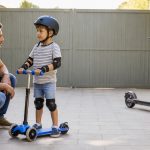
The Micro Sprite is a 6.8-pound folding two-wheel scooter with a 25.5–37-inch adjustable T-bar, 120 mm polyurethane wheels, 13.5 × 4-inch deck, kickstand, and 220-pound published rider limit. It is positioned for ages six and older moving beyond three-wheel lean-to-steer scooters.
Our verdict: the Sprite is a strong premium transition scooter for a rider who can already balance, steer with a rotating handlebar, and operate a rear brake. It is especially easy to carry and store. Small 120 mm wheels remain the central tradeoff: they are nimble and compact on smooth pavement but less forgiving at cracks than 200 mm wheels.
Micro Sprite Specifications
| Manufacturer age | 6+ |
|---|---|
| Maximum rider weight | 220 lb |
| Scooter weight | 6.8 lb |
| T-bar height from ground | 25.5–37 inches |
| Deck | 13.5 × 4 inches |
| Wheels | 120 mm polyurethane |
| Folded size | 26 × 4.5 × 8 inches |
| Folding | Folding T-bar and collapsible grips |
| Included convenience | Kickstand; compatible with carry strap |
Official specifications: Micro Sprite Scooter
Who Is Ready for the Sprite?
The move from a three-wheel scooter changes both balance and steering. A Sprite does not stand upright by itself. The rider must balance during every slow roll and turn the handlebar like a bicycle rather than leaning against two front wheels.
Before buying, look for five skills: one-foot balance for several seconds, straight glides, controlled handlebar turns, reliable rear-brake use, and attention to path hazards. A confident five-year-old may physically operate it, but Micro’s published starting age is six. Follow the manufacturer range.
Fit and T-Bar Adjustment
The 25.5–37-inch ground-to-bar range is unusually useful because it can be measured before ordering. Compare it with the child standing in shoes. The grips should land near the waist to lower ribs, with shoulders down and elbows bent.
The 220-pound weight limit describes structural capacity, not universal adult fit. A tall adult may find the 37-inch maximum low and the 4-inch deck narrow. Measure before sharing it across generations, and never raise the bar beyond its marked limit.
120 mm Wheels and Ride Quality
Two 120 mm polyurethane wheels make the Sprite compact, responsive, and efficient on clean concrete. High-grade polyurethane and bearings can deliver a smooth glide within that environment. The wheels do not absorb sharp edges like air tires.
Approach sidewalk seams squarely and at controlled speed. Walk over gravel, wet leaves, drainage gaps, broken pavement, and curbs. Families with consistently rough paths should compare a 200 mm big-wheel scooter, accepting its added weight and size.
Folding and Portability
Portability is the Sprite’s standout advantage. At 6.8 pounds and 26 inches long when folded, it fits many trunks and lockers more easily than a three-wheel Maxi or a big-wheel commuter. Collapsible grips narrow the package, and the kickstand keeps it upright during short stops.
Every folding feature requires a check. Confirm the joint is fully open and locked, both grips click into place, and the T-bar clamp holds without rotation. A partially engaged button is a stop-riding condition.
Deck, Brake, and Foot Placement
The 13.5 × 4-inch deck is long enough for a child’s leading foot and repositioning, but it is not a wide standing platform. The rider should keep the front foot centered and leave the rear fender visible for braking.
Practice sliding the pushing foot onto the brake without looking down. A rider who steps off at speed or stomps the fender unpredictably needs more low-speed practice. Wet urethane, dust, steep slopes, and heavier riders can lengthen stopping distance.
Standard Sprite vs Sprite Suspension
| Feature | Sprite | Sprite Suspension |
|---|---|---|
| Starting age | 6+ | 8+ |
| Weight | 6.8 lb | 9 lb |
| T-bar range | 25.5–37 in | 31–40 in |
| Deck | 13.5 × 4 in | 13.2 × 4.5 in |
| Wheel | 120 mm | 120 mm with suspension system |
| Best fit | Child/teen portability | Taller older rider wanting vibration reduction |
Do not buy the Suspension based on its name alone. It weighs about 2.2 pounds more and starts with a much higher T-bar. The standard Sprite is easier for a smaller six-year-old to fit and carry.
Parts and Long-Term Ownership
Micro describes the Sprite as modular, with most parts replaceable. That can justify a premium price if the family will maintain the scooter and pass it down. Check current availability for wheels, grips, brake, folding hardware, and bar components before purchase.
Replacement does not mean improvisation. Use the exact Sprite manual and approved parts. Stop riding after a hard impact until the fork, bar, joint, deck, brake, wheels, bearings, and axles have been inspected.
Who Should Skip the Standard Sprite?
Skip it for a child who still relies on a three-wheel scooter to stand at rest, turns only by leaning, or cannot use a rear brake without looking down. A Mini or Maxi-style three-wheel model gives that rider a more gradual learning path.
It is also the wrong tool for broken sidewalks, gravel paths, daily wet-weather travel, or a tall adult who needs a higher bar and larger deck. The 220-pound ceiling can make the Sprite look universal, but capacity is only one dimension. A 200 mm commuter or pneumatic-tire scooter may fit those routes better, though it will be heavier.
Finally, skip the premium if the scooter will be used only a few times. Replaceable parts create value through years of ownership; they do not matter when the child has no interest in two-wheel riding.
Pros and Cons
What works
- Light 6.8-pound package for carrying.
- Wide 25.5–37-inch adjustment range.
- Compact folding frame and grips.
- Replaceable-parts strategy supports longer ownership.
- 220-pound structural limit allows some family sharing.
What to consider
- 120 mm wheels prefer smooth pavement.
- Two wheels demand more balance than a Mini or Maxi.
- Narrow deck may not suit large adult shoes.
- Premium price is difficult to justify for occasional use.
- No suspension on the standard model.
Affiliate link: [AFF-LINK]
First-Ride Safety Checklist
- Set and lock the T-bar below its maximum mark.
- Lock the folding joint and both grips.
- Inspect wheels, bearings, axles, fork, deck, and brake.
- Practice one-foot balance and walking-speed glides.
- Complete ten controlled stops inside a marked zone.
- Walk rough seams, slopes, wet areas, and traffic crossings.
Use our kids scooter sizing guide and scooter safety guide.
Frequently Asked Questions
What age is the Micro Sprite for?
Micro lists ages six and older for the standard Sprite. Readiness still requires two-wheel balance, steering, and reliable braking.
Does the Micro Sprite fold?
Yes. The T-bar and grips fold, producing a published 26 × 4.5 × 8-inch package. Check every latch before riding.
Can an adult ride it?
The 220-pound limit covers many adults, but the 37-inch bar maximum and 4-inch deck can be too small. Measure fit rather than relying on capacity.
Are Micro Sprite wheels good on rough sidewalks?
They are smooth on clean pavement but only 120 mm and solid polyurethane. For consistently rough routes, compare larger air or suspension options.
Final Verdict
The Micro Sprite is an excellent premium step from three wheels to two when a rider fits the 25.5–37-inch bar range and has the balance to use it. Its low weight, compact fold, and replaceable parts are genuine ownership advantages. Families facing rough pavement or needing adult-size geometry should choose a larger-wheel model instead.