
Category: Electric Scooters
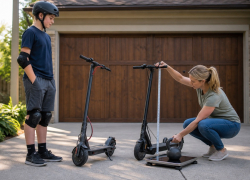
“Big kid” can mean tall, heavy, broad-shouldered, long-footed, or simply growing faster than an age label predicts. Payload alone is a poor selector: a compact ...
READ MORE +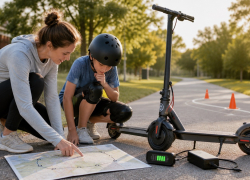
Long range sounds reassuring, but a child’s scooter should not be chosen for how far it can travel away from an adult. The useful question is whether the ...
READ MORE +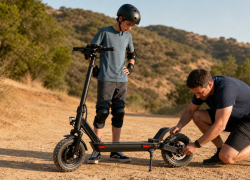
“Off-road” is one of the easiest scooter labels to overread. It may mean dry packed dirt and short grass—not jumps, rocks, mud, deep gravel, steep descents, or ...
READ MORE +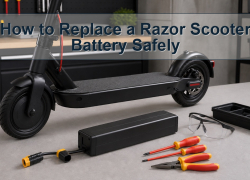
Knowing how to replace a Razor scooter battery safely does not mean following one universal wiring diagram. Razor electric scooters span sealed lead-acid and ...
READ MORE +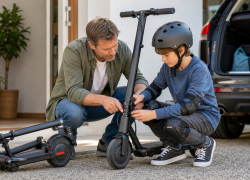
A foldable electric scooter saves space only when the folded shape fits the car, closet, stairs, and adult carrying plan. The hinge also becomes a ...
READ MORE +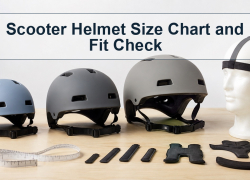
A reliable scooter helmet size chart begins with centimeters, not age, “youth,” or a guess from the old helmet. Two helmets marked small can have different ...
READ MORE +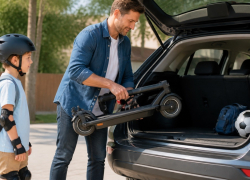
A lightweight electric scooter matters when a parent must lift it into a trunk, carry it up stairs, recover it after the battery empties, or store it inside. ...
READ MORE +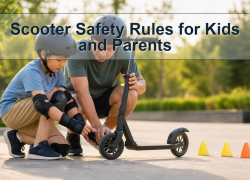
The best scooter safety rules are short enough for a child to repeat and specific enough for a parent to enforce. “Be careful” does not define where to ride, ...
READ MORE +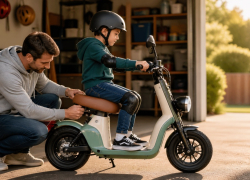
A seat changes scooter posture, storage, and low-speed comfort, but it does not remove collision or fall risk. Seated models are usually heavier, harder to ...
READ MORE +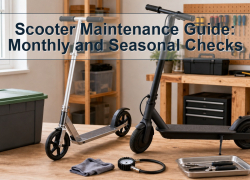
A useful scooter maintenance guide separates quick safety checks from actual service. Riders should inspect a scooter before every ride, while monthly and ...
READ MORE +- 1
- 2
- 3
- …
- 6
- Next Page »