Quick fit rule: a child should be able to stand naturally on the deck, keep the handlebars around hip-to-waist height, steer with slightly bent elbows, and reach the brake without stretching. Age labels help narrow the search, but actual height, weight, skill, and the manufacturer’s limits determine fit.
Measure the rider before shopping
- Measure the child’s standing height with shoes they will ride in.
- Measure from the floor to the crease of the hip or natural waist.
- Compare that measurement with the scooter’s stated handlebar height from the ground.
- Check the minimum and maximum rider weight and every age restriction.
- Confirm the child can place one foot securely on the deck while pushing and braking with the other.
Manufacturers measure handlebars differently, so use the product diagram or manual rather than assuming every published number uses the same reference point.
What correct scooter fit looks like
- The rider stands upright instead of hunching over or leaning backward.
- Elbows remain slightly bent during straight riding and turns.
- The rider can turn the bars fully without hitting their body.
- Both hands stay on the grips while the brake is used.
- The deck offers enough usable space without forcing an awkward stance.
- The scooter is light enough for the child to control, stop, and move when it is not rolling.
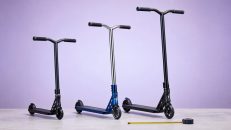
Bars that are much too low can force a forward lean; bars that are too high can reduce leverage and control. Adjustable handlebars are helpful only if the clamp locks securely at the chosen position.
Age is not a sizing chart
Children of the same age can differ greatly in height, strength, coordination, and confidence. Treat a product’s age label as a minimum eligibility rule, never as permission to ignore poor fit. A child who exceeds the maximum rider weight or cannot operate the brake should not use that scooter.
Three wheels or two?
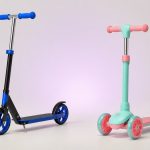
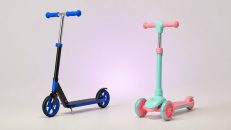
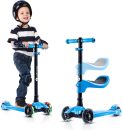
Three-wheel scooters usually offer more standing stability at low speed and are often easier for young beginners. Many use lean-to-steer steering, which feels different from turning bicycle-style handlebars. Two-wheel scooters require the rider to balance while rolling but may be lighter and more maneuverable.
Choose based on the child’s current control, not on pressure to “graduate.” See our full two-wheel vs three-wheel scooter guide.
Deck, wheel, and brake fit
A wider deck can feel reassuring to a beginner, but an excessively wide or heavy scooter may be harder for a small rider to push and turn. Larger wheels can roll more smoothly over imperfect pavement, while smaller wheels keep the deck compact and low. Neither is automatically safer; surface quality, scooter geometry, and rider control matter.
Rear-fender brakes are common on kick scooters. The child should be able to shift weight and press the brake without losing balance. Hand brakes must be reachable without releasing the grip.
Fit check when the scooter arrives
- Assemble it exactly as the manual specifies.
- Check every latch, clamp, and fastener.
- Have the child stand on it while an adult holds the scooter steady.
- Confirm posture, reach, deck space, and brake access.
- Practice walking, pushing, turning, and braking in a dry closed area.
Do not keep a poor-fitting scooter because the child may “grow into it.” Loss of control is a current problem, not a future one.
When to recheck the size
Recheck fit after a growth spurt, a handlebar adjustment, or a change in shoes or protective equipment. Also reassess when the rider starts hunching, striking the bars with their knees, struggling to steer, or exceeding a stated limit.
Fit is only one part of the decision. Review our complete scooter safety guide before the first ride.
Last reviewed: August 10, 2026.
Choosing dimensions before features prevents a poor fit. After checking handlebar and deck size, compare those measurements in our best electric scooter for kids guide.
A two-minute fit test at home
- Place the scooter on level ground and ask the child to stand naturally on the deck without riding.
- Check that the bars are around waist-to-lower-torso height and that the child can keep relaxed elbows rather than reaching or hunching.
- Ask for a full steering movement in both directions. Hands should stay secure and knees should not collide with the bars.
- Have the child operate the brake repeatedly. A hand brake must be reachable and controllable; a rear fender brake requires stable one-foot balance.
- Watch several push, glide, turn, and stop attempts in a clear area. Fit is acceptable only when control remains predictable during motion.
Do not buy excessive “growth room”
A scooter that is too tall, wide, heavy, fast, or difficult to brake today is not made safe by the promise that a child will grow into it. Adjustable bars are useful only when the minimum setting already fits. Likewise, a high maximum rider weight says nothing about minimum control fit.
Recheck fit after a growth spurt, a shoe change, a handlebar adjustment, or a move from three wheels to two. Also recheck whenever the child’s posture changes: locked elbows, leaning over the bars, knees contacting the bar, or difficulty reaching the brake are signs that the setup deserves attention.