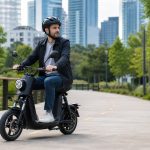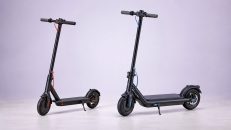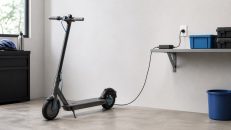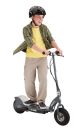
The best electric scooter for adults is not automatically the fastest or the one with the biggest range number. It is the scooter that fits your route, your body, your storage space, and the amount of weight you are genuinely willing to carry. For most everyday riders, predictable braking, useful range, good tires, parts support, and a sensible speed are worth more than an extreme specification you rarely use.
After comparing current manufacturer documentation, our best overall pick is the Segway Ninebot MAX G3 for riders who want a well-equipped, long-range commuter and can manage its 54.2-pound weight. The NIU KQi 300X is the more balanced value choice. If stairs or train connections dominate your day, the much lighter NIU KQi Air solves a different—and often more important—problem.
Best Electric Scooters for Adults: Quick Picks
- Best overall: Segway Ninebot MAX G3 — long manufacturer range claim, suspension, larger tires, strong payload rating, and a practical commuter feature set.
- Best value for most commuters: NIU KQi 300X — hydraulic front suspension, 10.5-inch tires, dual disc brakes, and a large battery without moving into performance-scooter territory.
- Best premium city commuter: Apollo Go — dual-motor acceleration, compact commuter geometry, suspension, turn signals, and a polished control system.
- Best lightweight option: NIU KQi Air — about 26.2 pounds, making it the clear choice when stairs and transit matter more than suspension.
- Best for shorter, calmer commutes: Segway E2 Pro — a moderate-speed, lower-cost platform with 10-inch tubeless tires and front drum/rear electronic braking.
- Best hill-focused value: InMotion Climber — dual motors and a high payload rating in a 46-pound package, with comfort and charge-time compromises.
Adult Electric Scooter Comparison
Every number below is a current manufacturer claim, not our measured result. Range is especially sensitive to rider weight, speed, temperature, hills, wind, tire pressure, stops, and battery age. Regional versions may also have different speed limits or equipment.
| Model | Best for | Claimed speed / range | Weight / payload | Ride hardware | Main tradeoff |
|---|---|---|---|---|---|
| Segway MAX G3 | Overall commuting and range reserve | Up to 28 mph / up to 50 miles by mode | 54.2 lb / 286 lb | 11-inch self-sealing tires, front and rear hydraulic suspension, dual disc brakes | Heavy for stairs or daily transit carrying |
| NIU KQi 300X | Balanced value and rougher city pavement | Up to 23.6 mph / 37.3 miles | 48.7 lb / 265 lb | 10.5-inch self-healing tubeless tires, hydraulic front suspension, dual disc plus regenerative braking | Still too heavy for frequent carrying |
| Apollo Go | Premium urban commuting and hills | Up to 28 mph / 36 miles | 49 lb / 265 lb | 9-inch self-healing tubeless tires, front spring and rear rubber suspension, rear drum plus regenerative braking | Higher speed demands experience and legal clarity |
| NIU KQi Air | Stairs, apartments, and train connections | US listing: up to 20 mph / about 30 miles | 26.2 lb / 264 lb | 9.5-inch tubeless tires, front disc plus regenerative braking, no conventional suspension | Premium price and firmer ride |
| Segway E2 Pro | Shorter commutes and newer adult riders | Up to 18.6 mph after supported app update / 15.5 miles at max-speed test | 41.4 lb / 265 lb | 10-inch tubeless tires, front drum plus rear electronic brake, no suspension | Limited range reserve and comfort on broken pavement |
| InMotion Climber | Steeper routes and higher rider load | Up to 24 mph / about 35 miles | 46 lb / 287 lb | Dual 450W nominal motors, 10-inch tires, drum plus electronic braking | No suspension and roughly nine-hour stock charge time |
How We Chose These Adult Electric Scooters
This is a research-based shortlist, not a collection of whichever products happened to have the most marketplace reviews. We started with six common adult use cases: an all-around commute, a value-focused city ride, a premium dual-motor commute, a transit connection, a shorter beginner route, and a hill-heavy route.
We then checked current manufacturer pages and manuals for the details that change the ownership experience: scooter weight, payload, battery energy, mode-specific range, speed, brakes, tire type, suspension, folded dimensions, charging time, water-resistance statements, certification claims, warranty, and parts or support visibility.
A large speed or range claim did not automatically improve a ranking. We looked for a sensible relationship between the specification and the use case. A 54-pound scooter can be excellent for a garage-to-office commute but miserable for a fourth-floor walk-up. A 26-pound carbon-fiber scooter can transform a train connection, yet its lack of suspension may make a broken five-mile route uncomfortable.
- We rewarded: clear documentation, useful braking, realistic rider support, tubeless or serviceable tires, lighting, route-appropriate range, and a recognizable service path.
- We penalized: unclear product identity, poor portability for the intended use, one-brake dependence, vague charger support, and a specification that only works under unusually gentle conditions.
- We treated cautiously: peak motor power, maximum grade, “up to” range, water ratings, app-only features, and temporary sale prices.
- We did not use: invented test rides, anonymous marketplace claims, or customer anecdotes as substitutes for manufacturer limits.
The result is not a universal ranking. It is a set of starting points for different adults. Your route and storage conditions should be able to change the winner.
1. Segway Ninebot MAX G3 — Best Overall Adult Electric Scooter
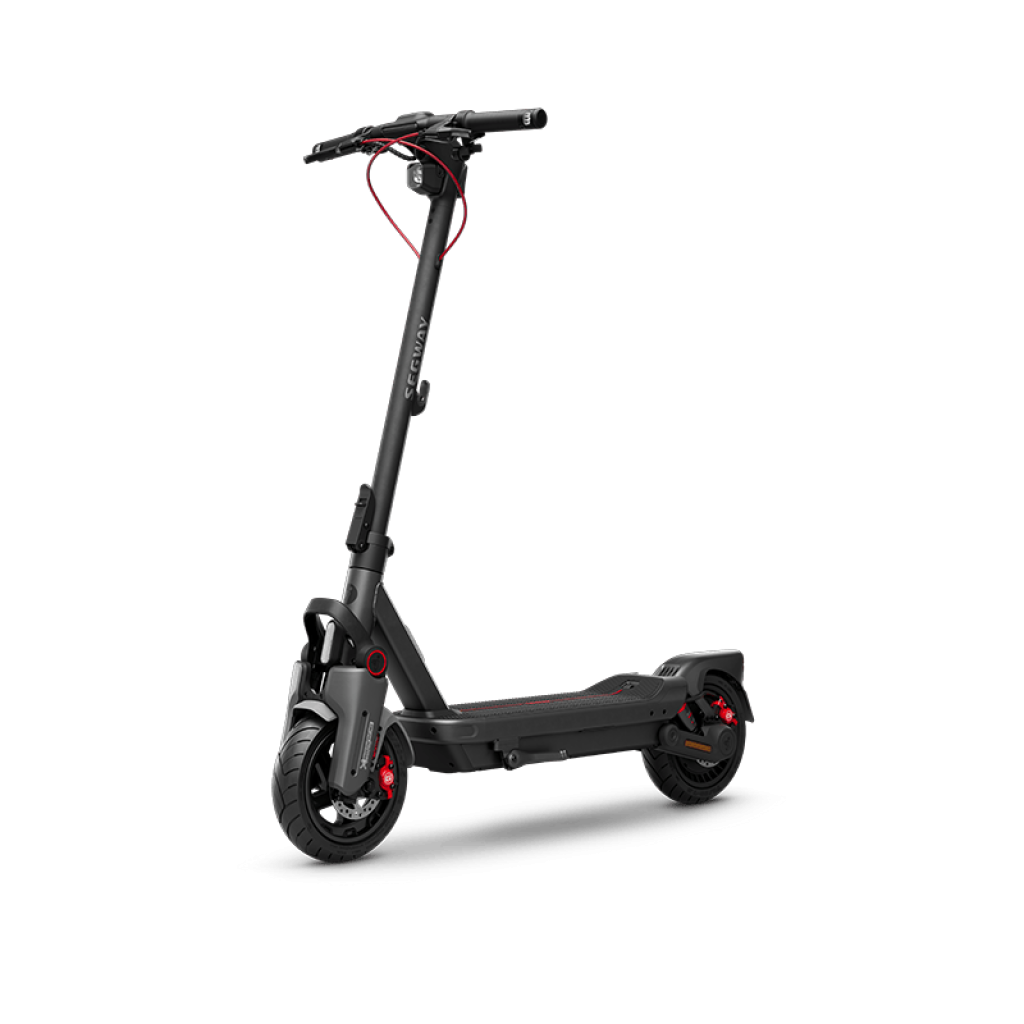
The MAX G3 is our best overall recommendation because it addresses the things that make a commuter scooter easier to live with after the first week. It has useful range reserve, large tires, suspension at both ends, a high stated payload, disc brakes front and rear, and a built-in charger. Those features matter on ordinary routes with patched pavement, changing rider loads, and days when the battery is not starting at 100 percent.
The 597Wh battery is large enough to support a real commute without pushing the chassis into extreme performance-scooter size. Segway’s manual separates range by riding mode, which is more helpful than one unexplained maximum. Even so, the highest figure is not a promise for a heavier rider at top speed. We would map the round trip, reserve at least 20–30 percent, and prove the route through several shorter rides.
The suspension and 11-inch tires are the strongest practical reasons to choose it over a cheaper rigid scooter. They cannot make potholes safe, but they should reduce the amount of sharp pavement feedback transferred to the rider. A larger contact patch and full-size deck also make sense for adults who find compact scooters nervous or cramped.
Now the objection: 54.2 pounds is not “portable” simply because the stem folds. Carry something of similar weight through your actual stairwell before buying. The MAX G3 is better for a home, garage, elevator building, or secure ground-floor storage than a daily third-floor carry. The same weight that helps it feel substantial on the road becomes a problem when the lift is out.
What we like
- Large battery and mode-specific range claims create more planning flexibility.
- Front and rear hydraulic suspension suit imperfect urban surfaces better than a rigid frame.
- Dual disc brakes give a familiar mechanical system at both wheels.
- High payload rating gives more room for rider plus normal commuter cargo.
- Self-sealing tubeless tires reduce—but do not eliminate—puncture inconvenience.
- Segway publishes a detailed current manual, support materials, and exact pressure guidance.
What could be better
- The weight makes stairs, trunk loading, and transit transfers demanding.
- The app-enabled maximum speed is unnecessary or illegal on many routes.
- A larger, more complex scooter costs more to repair when suspension or electronic features need service.
- The top range claim requires favorable speed, load, temperature, and pavement conditions.
Best suited for: An adult who wants one well-equipped commuter for medium or longer routes, has secure storage, and values comfort and range reserve over easy carrying.
Skip it if: You carry the scooter every day, have a very short flat trip, or cannot legally use even its lower modes on the intended route.
Source: official Segway MAX G3 manual. Verify the regional version and current firmware before purchase.
2. NIU KQi 300X — Best Value for Most Commuters
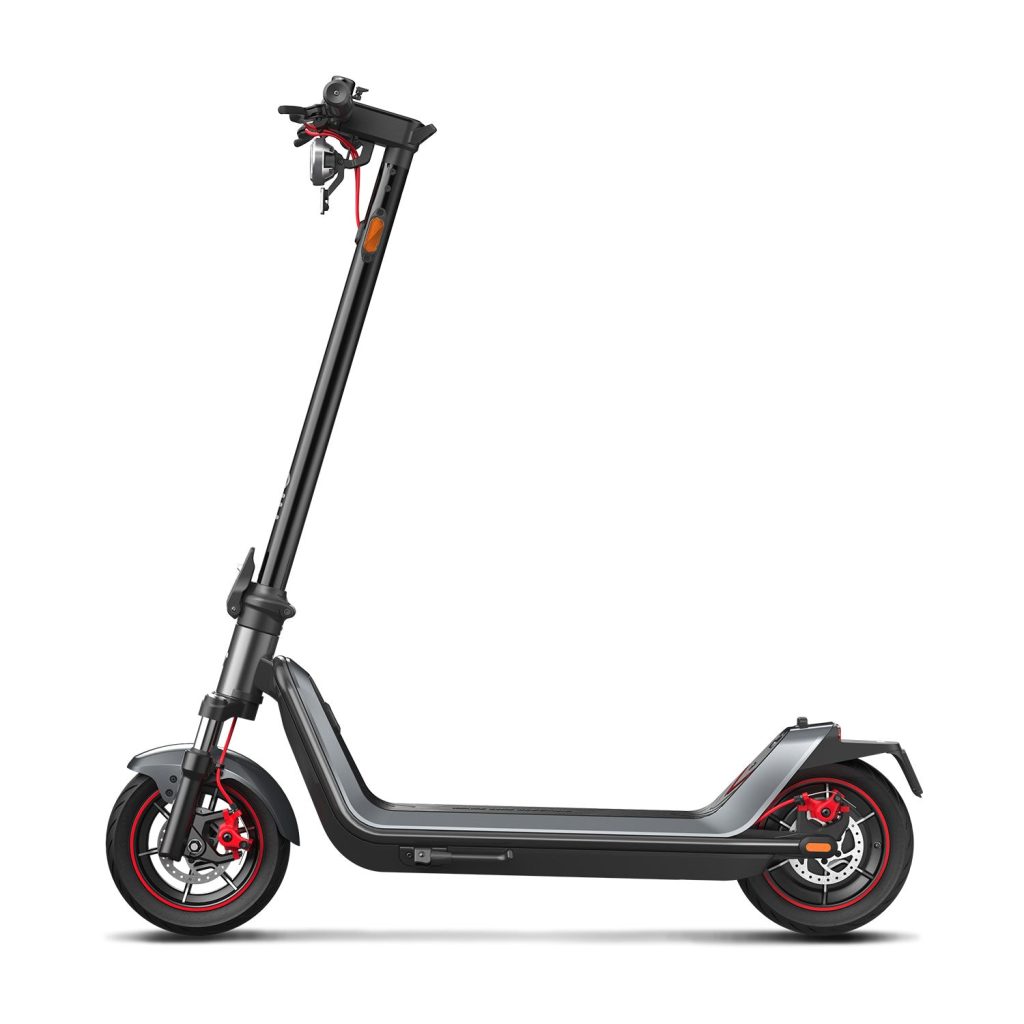
The KQi 300X is the model we would put in front of the largest number of ordinary adult shoppers. It is not as light as a transit scooter and not as powerful as the dual-motor picks. Instead, it builds a balanced commuter around a 608.4Wh battery, large tires, front suspension, dual disc brakes, and a speed ceiling that is easier to understand than a 30-plus-mph performance platform.
That balance matters. The battery is slightly larger than the MAX G3’s on paper, although NIU’s maximum range claim is lower. This is a reminder that range figures cannot be compared without test conditions. Use the 37.3-mile number to understand the battery class, not to schedule a 37-mile ride. A 12-mile round trip with hills and a reserve is a more credible assignment than a route at the advertised limit.
The 10.5-inch tires and hydraulic front suspension should help on seams, small cracks, and coarse pavement. Because there is no matching rear suspension, the back of the scooter can still feel firm over sharp impacts. Riders with a rough route should not assume the “all-terrain” wording means trails, potholes, curbs, or loose surfaces are appropriate.
We also prefer the braking layout for a general adult audience. Mechanical discs at both wheels provide a physical braking path, while regenerative braking can add controlled deceleration. The rider still needs to practice because aggressive front-brake input and poor body position can destabilize any short-wheelbase scooter.
At 48.7 pounds, the KQi 300X remains a roll-and-store scooter, not a casual shoulder carry. It is lighter than the MAX G3, but the difference is not enough to make four flights of stairs pleasant. If your commute includes transit barriers, the KQi Air belongs higher on your list.
What we like
- Large battery and moderate top speed suit practical commuting.
- Dual disc brakes provide a clear mechanical braking layout.
- 10.5-inch tubeless tires and front suspension address common city-road discomfort.
- Turn signals, lighting, app features, and published replacement items improve daily usability.
- The current product page identifies warranty and certification information instead of hiding it.
What could be better
- Nearly 49 pounds is too heavy for frequent stairs.
- Front-only suspension does not isolate the whole rider from impacts.
- The wide performance gap between “up to” range and a faster real commute needs a generous reserve.
- A twist throttle is a preference issue; some riders find a thumb control easier to modulate.
Best suited for: A commuter who wants useful comfort, braking, and battery capacity without buying a very fast dual-motor performance scooter.
Skip it if: Your route is dominated by stairs, your local limit is much lower than the scooter’s modes, or you need full front-and-rear suspension.
Source: official NIU KQi 300X product page. Price and inventory can change.
3. Apollo Go — Best Premium Urban Commuter
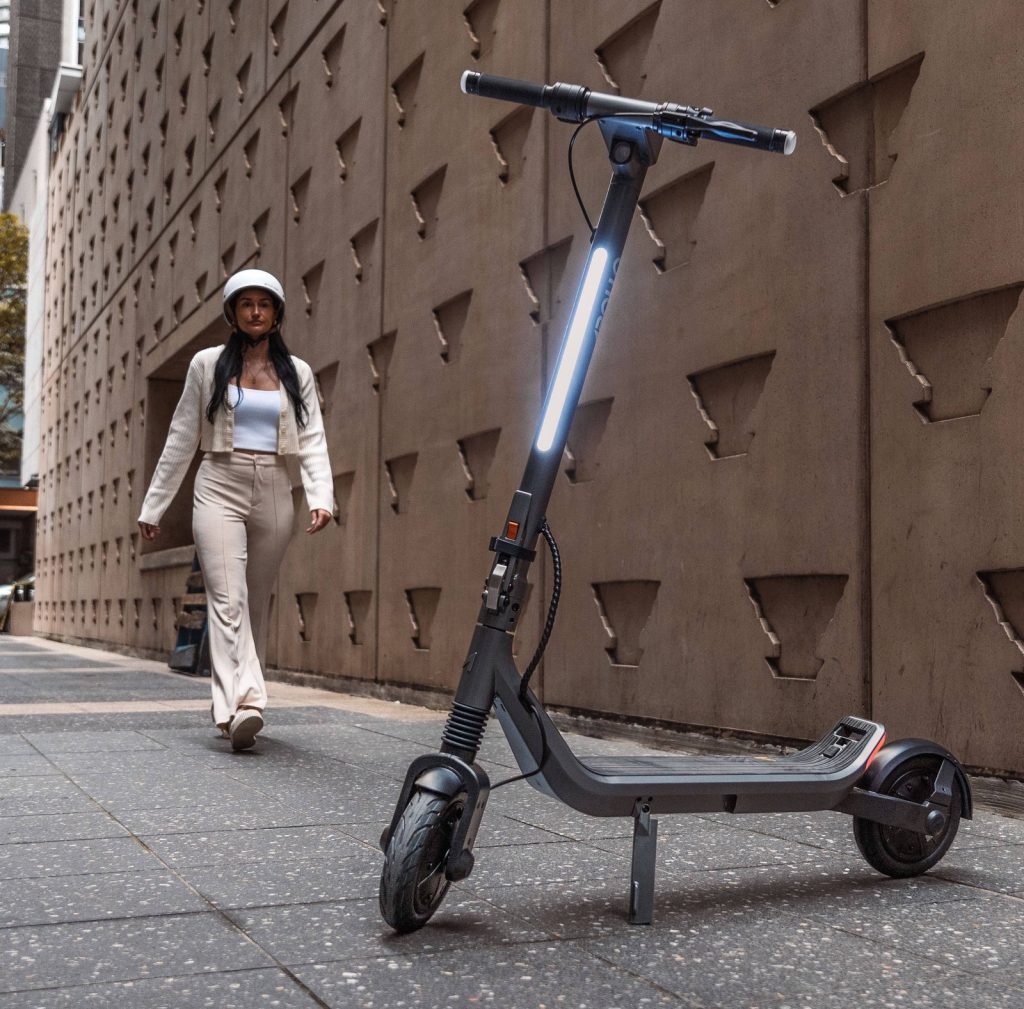
The Apollo Go is the premium choice for a rider who needs stronger acceleration and hill ability but still wants a commuter-sized scooter. Its dual-motor system is the main difference. Instead of using one motor at a high load on every climb, the scooter can distribute drive across both wheels. That should help maintain momentum on steeper routes, although the manufacturer’s maximum-grade claim is still a controlled figure, not a guarantee for every rider and hill.
The Go also has a more developed control and visibility package than many midrange scooters. Integrated turn signals, a bright stem and rear light, app-adjustable acceleration and regenerative braking, and a readable built-in display all support daily use. These features do not create right-of-way or guarantee that a driver has seen you, but they give the rider better tools than a small headlight and reflector alone.
A rear drum brake combined with regenerative braking is a low-maintenance arrangement. Apollo positions the mechanical brake as a backup to its regenerative system. We would still test both carefully and confirm the manual’s adjustment procedure. Regenerative braking depends on electronics and can feel different at a full battery or under changing conditions; the mechanical system remains important.
Ride comfort is another reason to consider the Go. It combines a front spring with a rear rubber absorber and self-healing tubeless tires. That is useful for normal city imperfections, not an invitation to hit curbs or ignore potholes. The 9-inch wheels are smaller than those on the Segway MAX G3 and NIU KQi 300X, so obstacle awareness still matters.
The biggest caution is speed. Twenty-eight miles per hour is far beyond what many new riders need and beyond the permitted limit in many locations. The Go makes most sense when an experienced adult can use a legal lower mode for routine riding and values dual-motor hill performance—not when the purchase is driven by the top number.
What we like
- Dual-motor drive gives the shortlist a genuine hill-focused premium option.
- Front and rear suspension improve comfort without creating an extremely large frame.
- Turn signals, strong lighting, and app-adjustable response are useful commuter features.
- Drum and regenerative braking can reduce routine pad maintenance.
- Apollo publishes detailed specifications, certification claims, warranty terms, and repair support information.
What could be better
- The top speed adds risk, legal restrictions, and a steeper learning curve.
- Forty-nine pounds is not comfortable for daily stair carrying.
- The stock charge-time claim is long for a 540Wh battery.
- Heavy reliance on regenerative braking makes proper setup and practice important.
Best suited for: An experienced adult commuter with hills, secure storage, and a need for stronger acceleration in a compact dual-motor format.
Skip it if: You are a first-time rider, need a truly lightweight scooter, or cannot legally use its modes on your route.
Source: official Apollo Go product page. Confirm the exact current generation because Apollo’s 2026 lineup is changing.
4. NIU KQi Air — Best Lightweight Electric Scooter for Adults
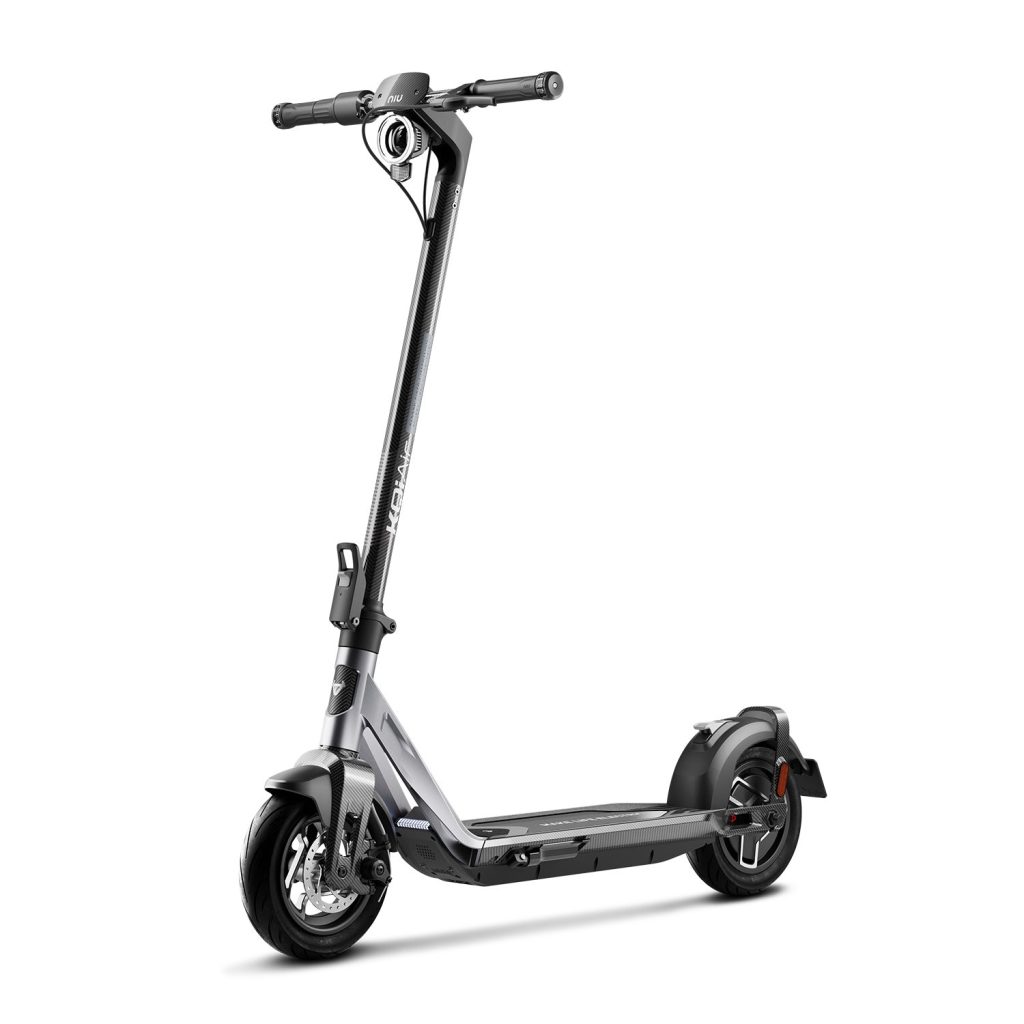
The KQi Air is the only scooter here that changes the portability calculation rather than slightly improving it. At about 26.2 pounds, it is roughly half the weight of the MAX G3. If your commute includes a station staircase, a small apartment, an office with no ground-floor storage, or frequent vehicle loading, that difference can matter more than another ten miles of claimed range.
NIU achieves the low weight with a carbon-fiber frame and a relatively large 451.2Wh battery for the category. The published payload remains 264 pounds. That combination gives the KQi Air an unusual strength-to-weight proposition on paper. The important question is whether the geometry fits you: a high payload number does not guarantee enough bar height, deck room, or comfort for every rider near that limit.
The main compromise is suspension. The 9.5-inch tubeless tires can take some edge off smooth city pavement, but there is no spring or hydraulic system isolating the rider from repeated cracks. A short route with one staircase strongly favors the KQi Air. A long route over patched asphalt may favor a 49-pound scooter with suspension even if carrying it is harder.
Braking uses a front disc and regenerative system. That is a reasonable lightweight layout, but it concentrates the mechanical brake at the front. Riders should practice progressive input, keep their weight stable, and understand how the regenerative system behaves. Tires also need pressure checks; “tubeless” does not mean maintenance-free.
US and European listings show different top-speed figures, so confirm the version, local rules, and app restrictions. Do not buy from a listing that combines US speed with EU product photos or warranty terms.
What we like
- The 26.2-pound weight solves stairs and transit better than any other pick here.
- Battery size is unusually generous for a genuinely lightweight frame.
- Wide deck and handlebar measurements are published for fit checks.
- Turn signals, lighting, NFC unlock, and app controls add practical convenience.
- NIU publishes chargers, tires, and support paths for the KQi family.
What could be better
- No suspension means a firmer ride on broken pavement.
- Carbon-fiber construction contributes to a premium purchase price.
- The front-disc/rear-regen layout needs deliberate brake practice.
- Regional listings vary, so seller and exact-version verification are essential.
Best suited for: Apartment dwellers, train commuters, and adults who must lift the scooter as part of every trip.
Skip it if: Your route is rough enough to require suspension, you never carry the scooter, or lower-cost portability is more important than the lightest practical weight.
Source: official NIU US store and detailed NIU KQi Air specifications. Match the region before ordering.
5. Segway E2 Pro — Best for Shorter, Calmer Commutes
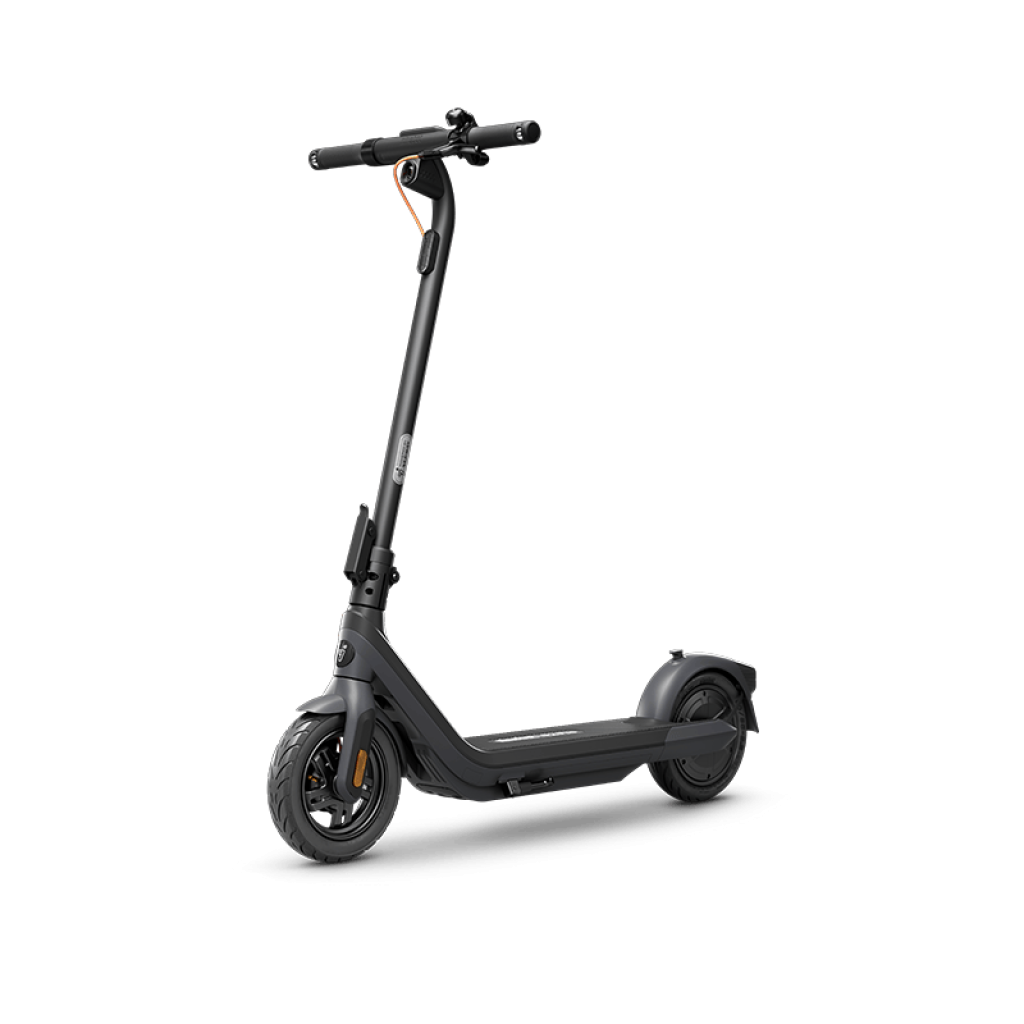
The E2 Pro earns a place because many adults do not need a 50-mile scooter. A three-mile flat commute, neighborhood errands, or a short connection to transit can be served by a smaller battery and moderate speed. Paying for unused battery capacity adds weight every time the scooter is lifted.
Segway publishes range figures at several speeds, which makes the E2 Pro easier to evaluate. The 15.5-mile max-speed test is the useful starting point for a faster rider; the larger eco claim reflects slower travel. A six-mile round trip with reserve is a better initial plan than treating 24.9 miles as guaranteed.
The 10-inch tubeless pneumatic tires are an advantage over tiny solid wheels found on some budget scooters. They still require pressure maintenance and do not replace suspension. On smooth asphalt the E2 Pro makes sense. On repeated brick, broken pavement, or harsh seams, the rigid frame can become tiring.
Its front drum plus rear electronic brake is enclosed and relatively low maintenance. As with every electronic brake, learn how it behaves at different speeds and battery states. The rider should be able to stop with the mechanical system even if regeneration feels different.
At 41.4 pounds, the E2 Pro is lighter than most of our list but not light. One short staircase may be reasonable for some adults; repeated transit transfers can still become frustrating. The KQi Air is dramatically easier to lift, while the KQi 300X buys more comfort and battery capacity for about seven additional pounds.
What we like
- Moderate speed and battery capacity fit short real-world trips.
- Segway provides mode-specific range conditions instead of one unexplained number.
- Ten-inch tubeless tires are more commute-friendly than small solid tires.
- Front drum braking reduces exposure to dirt and minor knocks.
- Published US support, manual, app, and certification information are easy to locate.
What could be better
- The 275Wh battery leaves less reserve for hills, cold weather, or heavier loads.
- No suspension limits comfort on damaged surfaces.
- Firmware and regional versions can change maximum speed.
- Forty-one pounds remains significant for frequent carrying.
Best suited for: An adult with a short, mostly smooth route who wants recognizable support and does not need premium range or suspension.
Skip it if: Your commute has sustained hills, rough paving, or a round trip that leaves little reserve from a 275Wh battery.
Source: official Segway E2 Pro page and current product manual. Confirm payload and speed for the exact regional version.
6. InMotion Climber — Best Hill-Focused Value
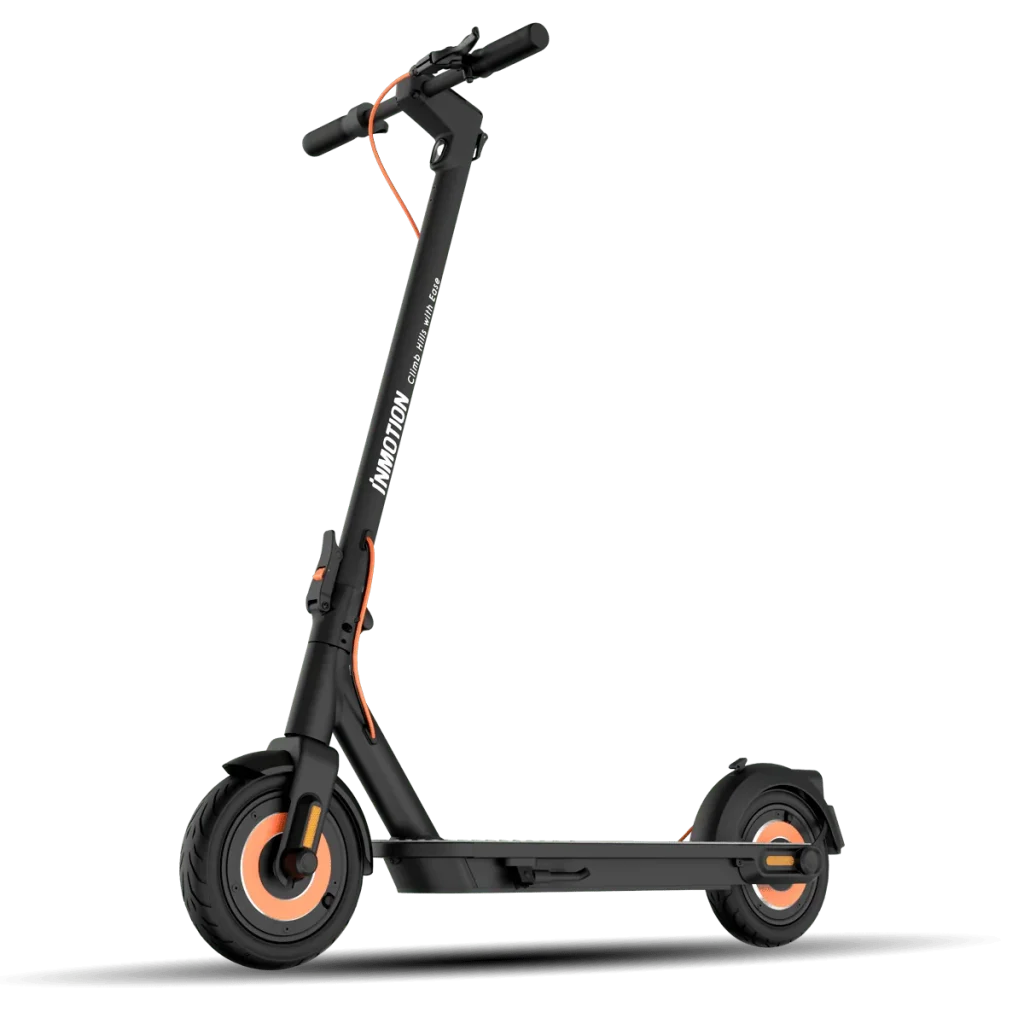
The Climber is the specialist in this shortlist. Its dual motors and 287-pound payload rating make it more credible for steeper routes and higher total loads than a lightweight single-motor scooter. It also keeps the reported weight to 46 pounds, which is unusually manageable for dual drive.
That does not mean every heavy rider will climb every advertised grade. Hill performance depends on rider and cargo weight, battery state, temperature, motor and controller temperature, tire pressure, hill length, starting speed, and surface. A short manufacturer grade test is not the same as a mile-long climb in summer traffic. Map the actual elevation and buy with thermal and range reserve.
The Climber’s clearest weakness is comfort. It does not offer the full suspension found on the MAX G3 or Apollo Go. Ten-inch pneumatic tires provide some cushioning, but they cannot absorb repeated sharp impacts. Riders choosing it for power should inspect the route carefully and keep tire pressure within the manual’s specification.
The stock charging claim is also long at about nine hours. That is workable for overnight charging while awake in the home and following the manual, but it reduces flexibility if you need a midday turnaround. Never substitute a faster charger unless InMotion approves it for the exact battery.
For a heavier rider, the 287-pound limit should not be treated as a target. Clothing, backpack, lock, and cargo count toward the total. Performance and stopping margin usually improve when the complete load stays comfortably below the maximum.
What we like
- Dual motors give it a clear hill-focused reason to exist.
- High payload rating helps larger adults build a shortlist with more margin.
- Forty-six pounds is relatively manageable for dual-motor hardware.
- The 533Wh battery is a sensible match for medium commuting rather than a tiny hill-scooter pack.
- App-level battery data can support maintenance and diagnosis.
What could be better
- No suspension is a significant comfort compromise.
- The stock charge-time claim is longer than comparable commuters.
- Hill and range claims still need to be discounted for real rider load and route length.
- Lighting and commuter visibility features are simpler than on Apollo or Segway models.
Best suited for: An adult whose real route includes sustained grades and who wants dual-motor support without a 60- to 80-pound performance scooter.
Skip it if: Ride comfort, rapid charging, integrated turn signals, or polished commuter lighting matter more than hill performance.
Source: official InMotion USA Climber page. Confirm the current tire, brake, charger, and warranty specification before checkout.
How to Choose the Best Electric Scooter for Your Adult Commute
A product shortlist is only useful after the route has been defined. Before you compare models, write down one normal round trip in detail: distance, legal riding areas, hills, surface, stops, stairs, doorways, storage, weather exposure, rider-and-cargo weight, and charging location. The scooter should solve that complete routine, not one attractive part of it.
1. Check where you can legally ride
Electric scooter laws can change between countries, states, provinces, cities, campuses, transit agencies, parks, and private developments. A rule for rental scooters may not cover privately owned scooters. Definitions can depend on maximum speed, motor power, seat, wheel count, or where the vehicle is used.
Start with the official transportation, motor-vehicle, or local government source for the exact location. Save the page, access date, vehicle definition, and rules for roads, bicycle lanes, sidewalks, paths, helmets, age, licensing, insurance, lighting, and parking. Recheck before a new route or trip. Our electric scooter legal-check framework explains the process without pretending one rule covers every rider.
2. Estimate range from the round trip, not the brochure
Advertised range usually comes from a lighter test rider, steady speed, moderate temperature, good tire pressure, flat pavement, and a new battery. Your commute may include faster acceleration, stops, headwind, cold weather, hills, rough surfaces, heavier load, and battery aging. Each factor consumes part of the margin.
Suppose your round trip is 12 miles. A scooter with a 15-mile maximum claim leaves almost no room for a detour, cold morning, or older battery. A 25- to 35-mile class is more credible, but you still need to test the route gradually. We prefer at least a 20–30 percent reserve after the normal trip. For a route with hills, winter use, or a rider near the load limit, leave more.
Battery watt-hours help compare capacity when brands disclose them. Watt-hours do not equal miles, because motor efficiency, controller tuning, speed, tires, and weight differ. Use them to identify battery class, then use the manufacturer’s mode-specific test conditions and your own route log. Read our full real-world electric scooter range guide before planning at the limit.
3. Treat hills as an energy and heat problem
Peak wattage is one of the least reliable comparison shortcuts. A brief peak number does not tell you how long the motor and controller can sustain useful power. Voltage, current limits, motor efficiency, wheel diameter, thermal protection, battery state, rider weight, and hill length all matter.
For a hilly route, look for nominal power, dual versus single drive, manufacturer test load, grade length, and whether independent tests use a similar rider. A dual-motor scooter such as the Apollo Go or InMotion Climber can distribute the work, but it also uses more energy when both motors are active. Range reserve and brake condition matter more on the same route because every climb is followed by a descent.
4. Choose brakes you understand and can maintain
Adult electric scooters may use disc, drum, regenerative, electronic, or combined systems. Disc brakes provide strong mechanical braking and are easy to inspect, but rotors can bend and pads wear. Drum brakes are enclosed and lower maintenance, though access and adjustment differ. Regenerative braking can create smooth deceleration and recover a small amount of energy, but it is not a substitute for a reliable mechanical brake.
Two listed brake types do not automatically create redundancy. Some levers activate multiple systems together, and electronic braking depends on the control system. Read the manual, practice progressive stops, and learn how the scooter behaves with a full battery, low battery, wet pavement, and different speed modes. If a brake changes feel, stop and inspect it.
5. Match tires and suspension to the actual surface
Large pneumatic or tubeless tires generally improve comfort and grip because the air volume can absorb small impacts. They require pressure checks and can puncture. Self-sealing gel helps with some small punctures but cannot repair sidewall damage, a cut, or every object.
Solid tires remove air-pressure and puncture maintenance, but they usually transmit more vibration and can behave differently on wet or loose surfaces. Suspension helps keep the rider and wheels calmer over imperfections. It does not make curbs, stairs, potholes, or trail riding appropriate.
Walk the roughest block of your route. A rigid lightweight scooter may be perfect for smooth protected lanes and miserable on repeated brick. A suspended scooter may improve comfort but add 20 pounds to the daily carry. Choose which problem you actually have.
6. Measure fit and count all rider load
Maximum payload is a structural and performance limit, not a guarantee that the scooter fits every rider below it. Include clothing, backpack, lock, groceries, and other cargo. Staying comfortably below the maximum can improve acceleration, range, hill margin, and braking.
Check handlebar height and width, deck length and width, control reach, stance, and turning clearance. A tall rider may need more bar height; a rider with large shoes may need more usable deck. Confirm that the throttle and brake can be used without changing grip.
Never carry a passenger unless the exact scooter is designed, documented, and legally permitted for that use. The models in this guide are presented as single-rider scooters.
7. Perform the real carrying test
“Foldable” describes a hinge, not portability. A 54-pound scooter remains 54 pounds when folded. Look at the folded dimensions, latch security, balance point, stem shape, exposed dirt, and whether the scooter can roll on one wheel.
Use a suitcase, weight plate, or other safe object of similar weight and carry it through the real stairwell. Open the door, turn on the landing, and place it where the scooter must be stored. This simple test often changes the winner from a long-range model to a lightweight one.
8. Verify battery, charger, and certification
Use only the charger supplied with or approved by the manufacturer for the exact model. A plug that fits does not prove the voltage, current, polarity, or charging controls are correct. Do not charge a wet, damaged, swollen, unusually hot, hissing, or odorous battery.
Look for an exact UL 2272 certification claim for the complete electrical system in North American listings, not vague wording about “UL components.” Battery certification and whole-system certification are different. Keep the product and charger labels photographed in case the manual or replacement information is needed later.
Charge while present, on a dry stable surface away from exits and combustible clutter, and follow the manual’s temperature limits. The electric scooter charging safety guide gives a complete household checklist.
9. Understand water-resistance claims
An IP rating describes controlled test conditions for specific exposure. It does not guarantee traction, visibility, brake performance, or warranty coverage in rain. The scooter body and battery pack may have different ratings. Ports, seals, damage, maintenance, and age can change protection.
Do not charge a wet scooter. After unexpected water exposure, follow the manual before powering or charging it. If regular rain is unavoidable, the safest answer may be a different transport plan rather than a higher IP number.
10. Check service, parts, warranty, and returns
Before paying, locate the manual, warranty, parts store, service contact, and return policy. Find out who pays shipping on a heavy defective scooter and whether a local shop will work on the brand. A low purchase price can become poor value when a proprietary tire, controller, display, or charger is unavailable.
Keep the shipping box until the return window closes if space allows. Photograph the unboxing, product label, and any damage. Register the scooter when the manufacturer provides a registration process, and keep receipts with serial and charger information.
Do This 20-Minute Route Audit Before You Buy
A product page cannot tell you whether an electric scooter fits your commute. The most useful research happens away from the shopping tab. Open your usual map, walk the awkward parts of the route, and write down the obstacles that a specification table cannot show. Twenty minutes of honest route work can prevent a very expensive mismatch.
Measure the complete door-to-door distance
Do not measure only the pleasant section between two landmarks. Start at the place where the scooter will be stored and end where it can be locked or carried inside. Include the trip across a parking lot, the detour to a legal crossing, the walk through a station, and the return journey. If you regularly stop for groceries, map that version too.
Now identify where the scooter must be carried rather than ridden. Count steps. Measure the narrowest door and the available storage footprint. Check whether an elevator is reliably available and whether your workplace allows a lithium-ion scooter indoors. A 30-mile range claim does not help if the scooter is too heavy for the first staircase.
Find the steepest sustained climb
A route described as “mostly flat” can still contain one climb that determines the correct motor and battery. Estimate the grade with a mapping tool, but also inspect its length, surface, traffic, and stopping points. Starting from rest on a slope is harder than entering it with momentum. A stop sign halfway up creates a different demand than an uninterrupted hill of the same average grade.
Rider load changes the result. Add your usual backpack, lock, clothing, and groceries rather than using body weight alone. If the combined load sits near a scooter’s limit, expect slower climbing, more heat, longer stopping distances, and less range. A dual-motor model may be justified for a sustained steep route, while a moderate single motor can be the calmer and more efficient choice on flat ground.
Mark every poor surface and conflict point
Look for drainage grates, railway tracks, broken asphalt, painted lines, wet leaves, gravel, driveway lips, blind corners, and places where drivers turn across the route. These hazards influence tire size and ride speed more than a motor-power headline. Small wheels can be deflected by an edge that a bicycle rolls over more easily.
If one block is consistently unsafe, plan a slower parallel street or walk that section. Buying more suspension is not a substitute for choosing a sensible path. The best electric scooter for adults is still limited by visibility, traction, local rules, and the rider’s ability to stop within the visible space.
Plan a bad-day alternative
Think about rain, extreme heat or cold, a flat tire, a low battery, a closed path, and an elevator outage. Can you put the folded scooter in a car or take it on transit? Can you walk it home? Is there a secure place to leave it while arranging transport? A model that is excellent on a perfect morning can become a liability when one part of the system fails.
- Normal round trip: ____ miles
- Longest realistic detour: ____ miles
- Steepest grade and length: ____ percent for ____ feet
- Rider plus normal cargo: ____ pounds
- Steps carried each way: ____
- Roughest repeated surface: ____
- Legal route and speed: ____
- Secure storage and charging location: ____
- Bad-weather or breakdown alternative: ____
Budget for the First Year, Not Just Checkout
Two scooters with similar prices can have very different ownership costs. Before choosing, build a simple first-year budget. Include the scooter, tax, helmet and protective gear, a suitable lock, a tire pump with an accurate gauge, consumable brake parts, tires or tubes where applicable, and any professional assembly or inspection you need. Do not reduce safety gear to make an expensive scooter fit the budget.
Shipping matters when a scooter weighs 40–55 pounds. Read the return policy for opened products, restocking fees, mileage limits, and responsibility for freight. Some defects can be handled with a mailed component; others may require the entire scooter. Ask how warranty labor works in your region and whether the company has an authorized service location you can actually reach.
Battery replacement is the long-term question many buyers miss. Look for a documented replacement path, current price, and clear model compatibility. You do not need to buy a spare battery on day one, and storing an unused lithium-ion pack creates its own responsibilities. You do need evidence that the scooter was designed to be supported after the original battery has aged.
Marketplace discounts deserve a product-identity check. Confirm the exact generation, voltage, battery capacity, regional speed configuration, included charger, seller, return terms, and warranty eligibility. A listing that uses photos from one version and specifications from another is not a bargain. Save a copy of the listing and order details so you can show what was represented at purchase.
Your First Week With a New Adult Electric Scooter
The first week should be a controlled setup period, not an immediate maximum-range commute. Unbox the scooter in good light and photograph the packaging, serial label, charger label, and any cosmetic or shipping damage. Compare every included part with the manual. If the stem, fork, wheel, cable, charge port, or battery enclosure appears damaged, stop before charging or riding and contact the seller.
Day one: fit, assembly, and static checks
Use the specified tools and tightening sequence. Confirm the folding mechanism is fully locked and that cables are not pinched or stretched through the steering range. Inflate pneumatic tires to the manual’s specified pressure; do not copy a random pressure from another model. Check the brakes while walking beside the scooter, then test the lights, indicators, bell, display, and throttle behavior according to the manual.
Stand on the deck with the power off. Find a staggered stance that lets you bend the knees and shift weight without stepping on the rear fender. Make sure both brake controls are comfortable to reach. If the handlebar height, deck room, or control reach feels wrong while stationary, speed will not fix the fit.
Days two and three: learn at low speed
Use a dry, level, traffic-free area where riding is permitted. Learn to push off, apply power smoothly, look through a turn, scan behind without swerving, and stop repeatedly from the lowest useful speed. Practice emergency-level braking progressively rather than grabbing the controls once. The goal is to learn how weight transfers and how the mechanical and regenerative systems combine.
Ride over only small, visible surface changes at first. Listen for rubbing, clicking, looseness, or a changing motor sound. Recheck the stem, folding latch, tires, and brakes after the initial rides, following the manufacturer’s inspection schedule. Stop if steering develops play, a wheel shifts, a brake loses consistency, or the battery or charger behaves abnormally.
Days four through seven: prove the route in sections
Ride the easiest part of the commute, then extend the distance over several sessions. Record starting and ending battery percentage, temperature, rider load, speed mode, wind, hills, and distance. Dashboard percentages are estimates, so look for a repeated pattern rather than trusting one ride.
Do not attempt the full round trip until the shorter rides leave a comfortable reserve and the rider can stop predictably. If a hill causes severe slowing, overheating warnings, or unexpectedly large battery use, change the route or the transport plan. If carrying is harder than expected, solve the storage problem before commuting daily. A scooter earns confidence through consistent behavior, not through one successful maximum-speed run.
Which Adult Electric Scooter Fits Your Use Case?
Common Adult Electric Scooter Buying Mistakes
Buying the maximum speed instead of the right mode
A higher top speed makes a product look future-proof, but it adds braking distance, legal problems, protective-equipment needs, and a more demanding learning curve. If the route limit is 15 or 20 mph, compare how smoothly each scooter behaves there. A useful lower mode is more valuable than an unusable maximum.
Planning a commute at the maximum range
A route that consumes the entire advertised range has no reserve for wind, hills, detours, cold weather, or battery aging. Buy enough battery for the difficult version of the trip, not the easiest test day.
Ignoring scooter weight until delivery
Many returns happen emotionally before they happen physically: the buyer sees “folding” and imagines easy carrying. Recreate the lift before checkout. Ten extra pounds can be worth it for suspension—or become the reason the scooter stays at home.
Treating a high payload as a complete fit guarantee
Payload does not measure handlebar height, foot room, control reach, or rider comfort. It also does not promise full speed or maximum range at that load. Fit and performance margin need separate checks.
Buying from an untraceable marketplace listing
A copied product name can hide a different battery, charger, firmware region, warranty, or model generation. Match the product ID, labels, manual, seller, and manufacturer support. If the listing cannot answer basic identity questions, leave it.
Safety and First-Ride Setup for Adult Riders
An electric scooter has small wheels, a short wheelbase, and standing rider position. It reacts more sharply to holes, gravel, water, and sudden steering than a bicycle. Even an experienced cyclist should treat the first session as a new skill.
- Read the complete manual and finish every required assembly and app step.
- Check tire pressure, wheel security, stem, folding latch, deck, controls, lights, and both braking systems.
- Wear a properly fitted helmet and protective equipment appropriate to speed and conditions.
- Start in the lowest useful mode on a dry, level, traffic-free surface.
- Practice smooth starts, straight tracking, scanning, wide turns, and repeated stops.
- Move your body back slightly under firm braking; do not lock the arms or stare at the front wheel.
- Keep both hands on the bars and do not carry a passenger.
- End the ride if steering shifts, braking changes, a tire loses pressure, warning codes appear, or the battery becomes unusually hot.
Use our broader scooter safety guide for pre-ride and post-ride routines. This article is general product research, not medical, legal, or individualized mobility advice.
Electric Scooter Maintenance and Ownership Costs
The purchase price is not the full budget. Pneumatic tires need pressure checks and eventually wear. Disc brakes need pad and rotor attention. Drum brakes need inspection and adjustment. Folding joints, axle hardware, lights, grips, and charging ports all need routine checks. Batteries lose capacity with age and use.
Keep a simple log with tire pressure, mileage, brake service, fastener checks, firmware changes, impacts, water exposure, and battery behavior. A new noise or change in range is easier to diagnose when you know what changed.
Budget for a helmet, protective gear, a suitable lock, replacement tires or tubes where applicable, brake parts, and professional service. Ask about battery replacement cost before buying. A scooter with an inexpensive purchase price and an unavailable battery is not a bargain.
For a short, smooth route where powered range is unnecessary, an adult kick scooter may be lighter, cheaper to maintain, and easier to carry. For riders who need a seat, read the seated electric scooter guide and confirm whether the seat changes local classification.
Frequently Asked Questions
Final Verdict
For a rider who wants the most complete adult commuter and does not carry it often, the Segway Ninebot MAX G3 is our first pick. Its range reserve, large tires, suspension, payload, and braking package address more everyday problems than a headline speed alone.
The NIU KQi 300X is the smarter value choice for many buyers. It keeps a large battery, dual disc brakes, self-healing tubeless tires, and front suspension in a more moderate platform. The Apollo Go earns its place when hills and stronger acceleration justify dual motors.
If carrying defines the commute, choose the NIU KQi Air. No 50-pound scooter is a better stair scooter because it has more range. For a short smooth route, the Segway E2 Pro avoids unnecessary size. For hills and higher load, the InMotion Climber is the focused value option if you accept its rigid ride and long charge time.
Related Adult Scooter Guides
- Estimate real-world electric scooter range
- Check electric scooter rules for your route
- Compare seated electric scooters for adults
- Use the electric scooter charging checklist
- Follow the complete scooter safety routine
- Compare adult kick scooters for shorter routes
- Read the EcoReco M5 legacy review
Editorial sources checked August 11, 2026: Segway MAX G3 manual and E2 Pro product documentation; NIU KQi 300X and KQi Air product pages; Apollo Go specifications; InMotion Climber product information; CPSC micromobility charging guidance; and current ForScooter safety, range, and legal-research resources. Manufacturer specifications are claims under stated test conditions. Prices and availability were intentionally not hard-coded.