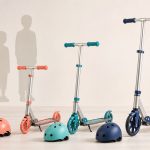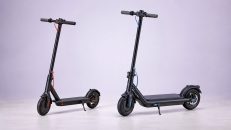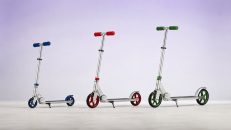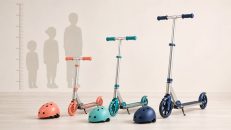
Bottom line: a three-wheel scooter is often easier for a young beginner to keep upright at low speed, while a two-wheel scooter rewards riders who already have balance and want a lighter, more maneuverable ride. The better choice depends on fit, steering style, riding surface, and skill—not age alone.
Two-wheel vs three-wheel scooter at a glance
| Factor | Three-wheel scooter | Two-wheel scooter |
|---|---|---|
| Low-speed stability | Usually more stable while standing or moving slowly | Requires active balance |
| Steering | Often lean-to-steer; some use turning handlebars | Usually bicycle-style handlebar steering |
| Learning focus | Leaning, pushing, stopping, and spatial awareness | Balance, steering, pushing, and stopping together |
| Weight and folding | Often wider and sometimes heavier | Often narrower, lighter, and easier to fold |
| Typical use | Young beginners and confidence-building | Confident riders, transport, and more agile turning |
How three-wheel scooters work
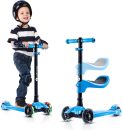
A common layout has two wheels in front and one at the rear. The wide front stance helps the scooter remain upright, and many models turn when the child leans. That can help a beginner learn body control, but it also means the child must understand that rotating the bar alone may not make the scooter turn.
Some three-wheel scooters place two wheels at the back and use conventional steering. Check the actual design before buying; “three-wheel” does not describe one universal riding experience.
How two-wheel scooters feel
A two-wheel scooter stays upright through the rider’s balance and forward motion. It generally feels more agile and occupies less width, but it can tip at a standstill. A beginner should be able to glide briefly, steer around a wide curve, and brake without stepping into the path of the scooter.
Choose three wheels when…
- the rider is new to wheeled toys and needs more low-speed stability;
- confidence and controlled pushing are the immediate goals;
- the child understands the model’s steering method;
- the deck, bars, brake, age, and weight limits fit correctly.
Choose two wheels when…
- the rider already balances confidently on a balance bike or scooter;
- they can start, steer, scan, and stop without adult help;
- a lighter or more compact folding design is useful;
- the product fits now and is intended for the riding environment.
Do not use wheel count as the only safety test
A poorly fitted three-wheel scooter can be harder to control than a correctly fitted two-wheel model. Compare handlebar height, total weight, wheel condition, deck space, brake access, speed, turning behavior, and manufacturer guidance. Read our kids scooter size guide for the full fit check.
A simple transition test
Before moving from three wheels to two, ask the child to demonstrate helmet use, controlled pushing, looking ahead, wide turns, planned stops, and stopping on command. Let them test a correctly sized two-wheel scooter in a flat, dry, traffic-free area with close supervision. If they repeatedly look down, panic-brake, or cannot hold a line, return to practice rather than forcing the transition.
Safety applies to both
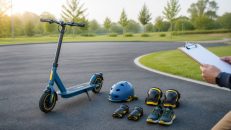
Use one rider per scooter, wear a properly fitted helmet and closed-toe shoes, inspect the scooter, and avoid traffic, steep hills, wet surfaces, stairs, and crowded paths. Our scooter safety guide provides a complete pre-ride checklist.
Last reviewed: August 10, 2026.
If a powered model is still under consideration, our current electric scooters for kids roundup includes both two-wheel and three-wheel formats.
Match wheel layout to the route, not just the age
For a preschooler learning in a small, flat courtyard, a lean-to-steer three-wheel scooter can reduce the balance demand and let the child concentrate on stopping and boundaries. On a longer smooth path, a coordinated rider may prefer the lighter steering feel and narrower footprint of a two-wheel scooter. Neither format belongs on steep slopes, wet paving, loose gravel, traffic routes, or crowded sidewalks for a beginner.
Also check the specific design. Some three-wheel scooters have two wheels at the front; others place two at the rear, where a child’s pushing foot may strike them. Some two-wheel scooters have tiny hard wheels that stop sharply at cracks. Wheel count cannot replace measurements, surface checks, and a brake test.
A practical transition drill
- Set two parallel lines about 20 feet apart on a dry, level surface.
- Ask the rider to push, place both feet, look ahead, and coast straight.
- Add a wide turn around a marker without crossing the boundary.
- Ask for a controlled stop before the second line five times in a row.
- Repeat while the rider looks briefly toward an adult standing to the side.
If the child steps off calmly and controls the scooter throughout, trial a correctly sized two-wheel model at low speed. If steering becomes abrupt or stopping becomes inconsistent, return to the familiar scooter and practice rather than forcing the transition.
Recheck after the first few rides
The correct choice can change as confidence grows. Watch for repeated wheel strikes, foot contact with rear wheels, abrupt leaning, difficulty lifting the scooter, or a brake that the child avoids using. Adjust the setup only within the manufacturer’s instructions. If the rider becomes faster without becoming more observant, keep the practice area small and structured rather than moving immediately to a more agile scooter.