
Kids Scooter Safety Tips And Tricks Infographic
Safety is the best priority. Always keep in mind about safety part when you give a scooter on your kids hands.
Helmet,knee pad,knee guard are most uses safe accessories.We collected and share here a cool and informative info-graphic about scooter safety guide-lines,We hope it will help to understand more !
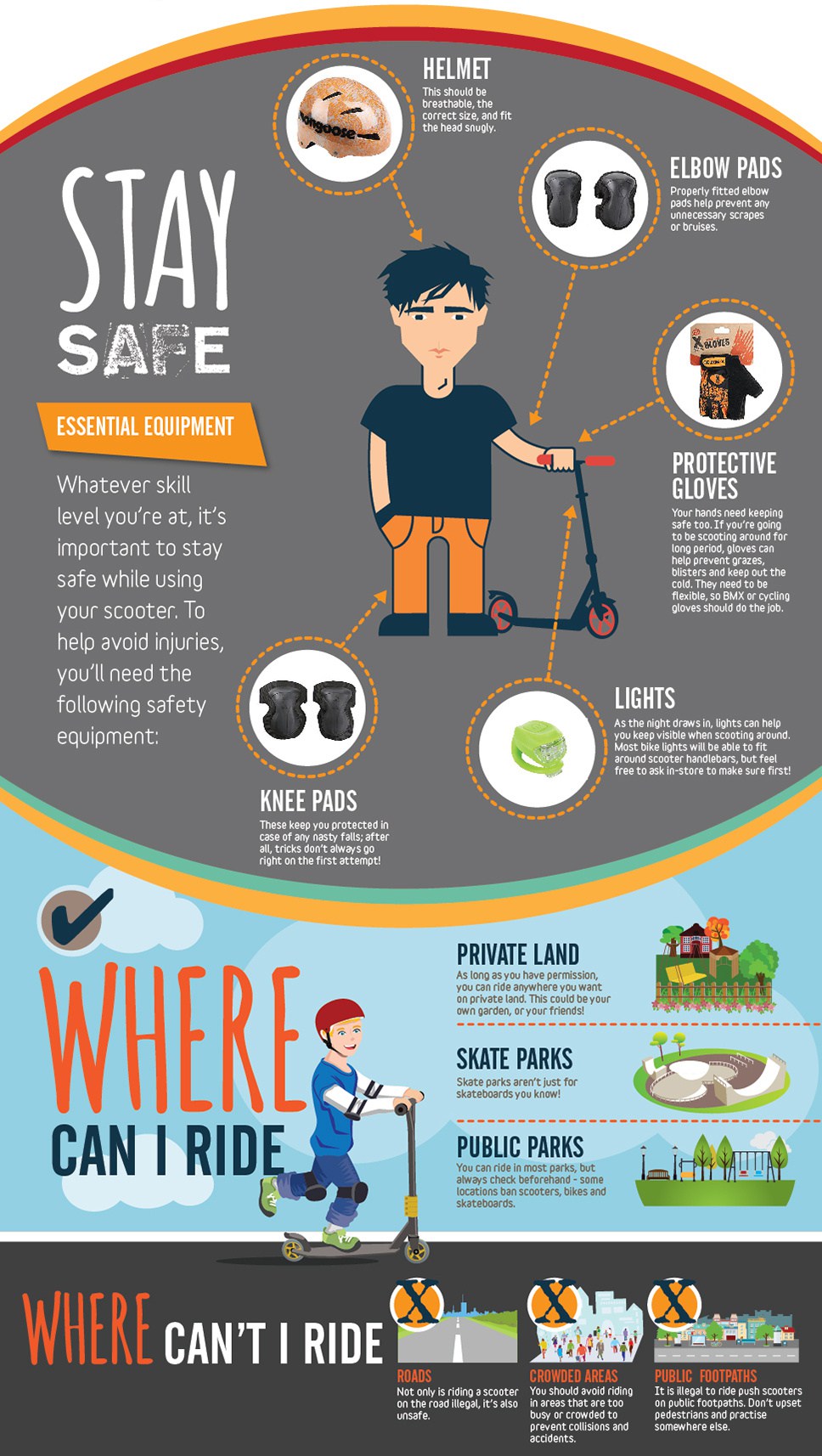
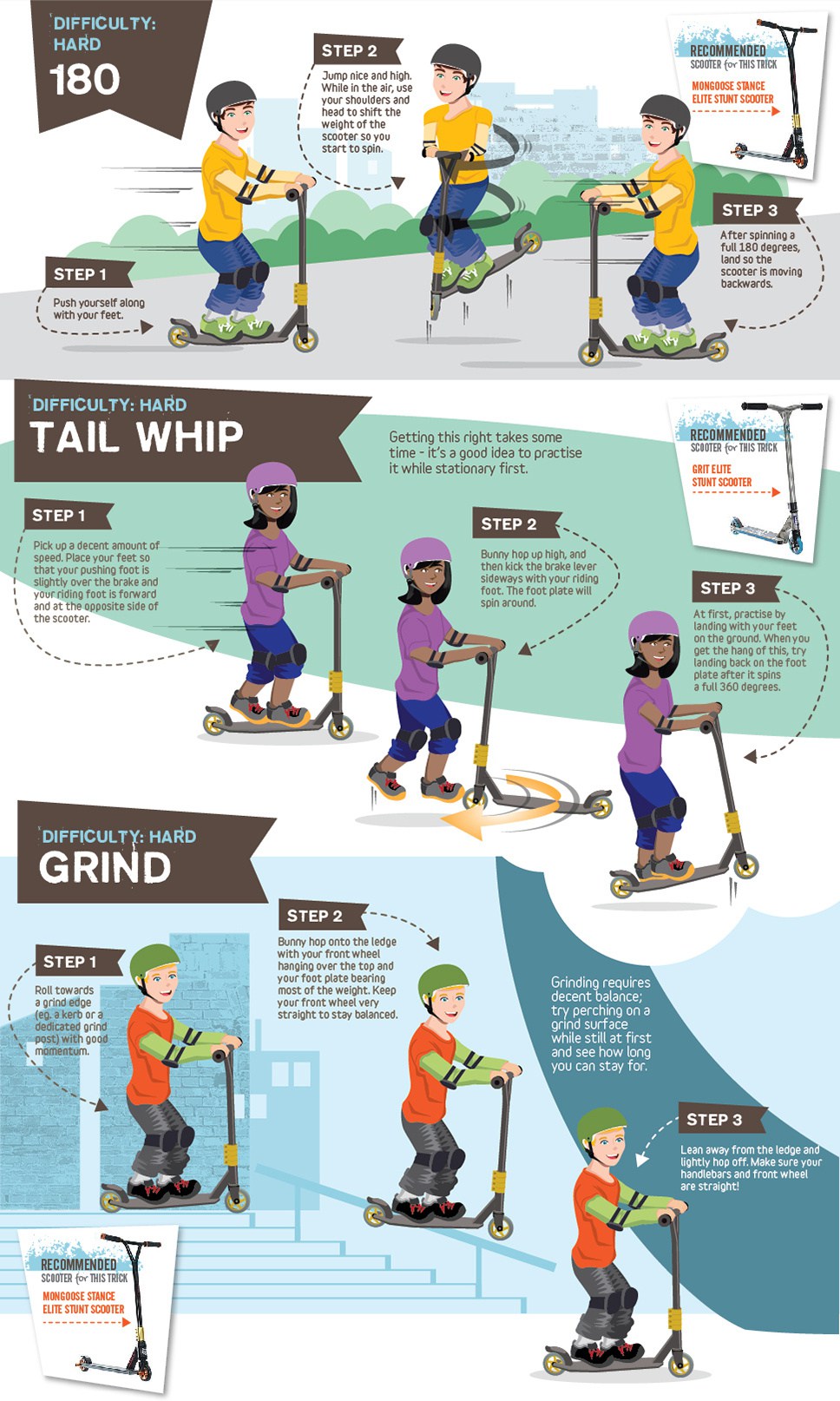
Helmets and Safety for Kids Riding a Scooter or Balance Bike
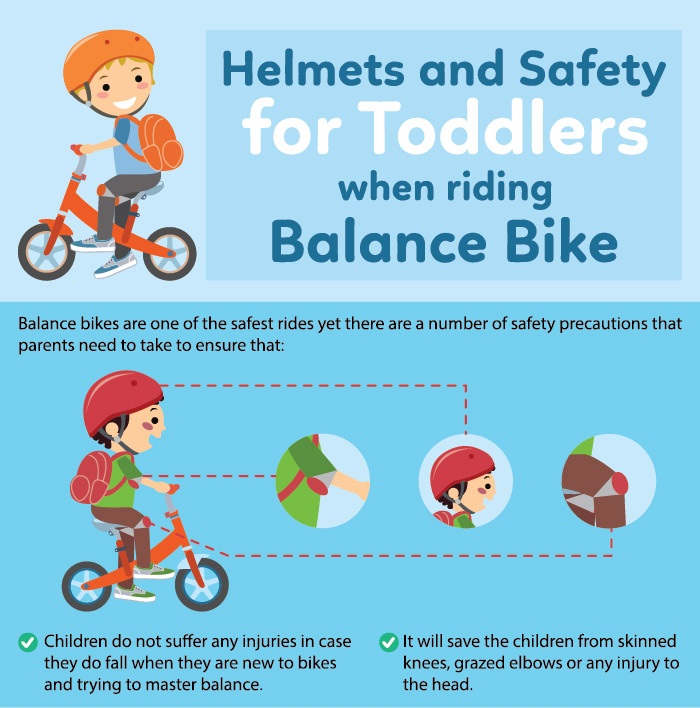
Essential Safety Equipment for a Kids Scooter
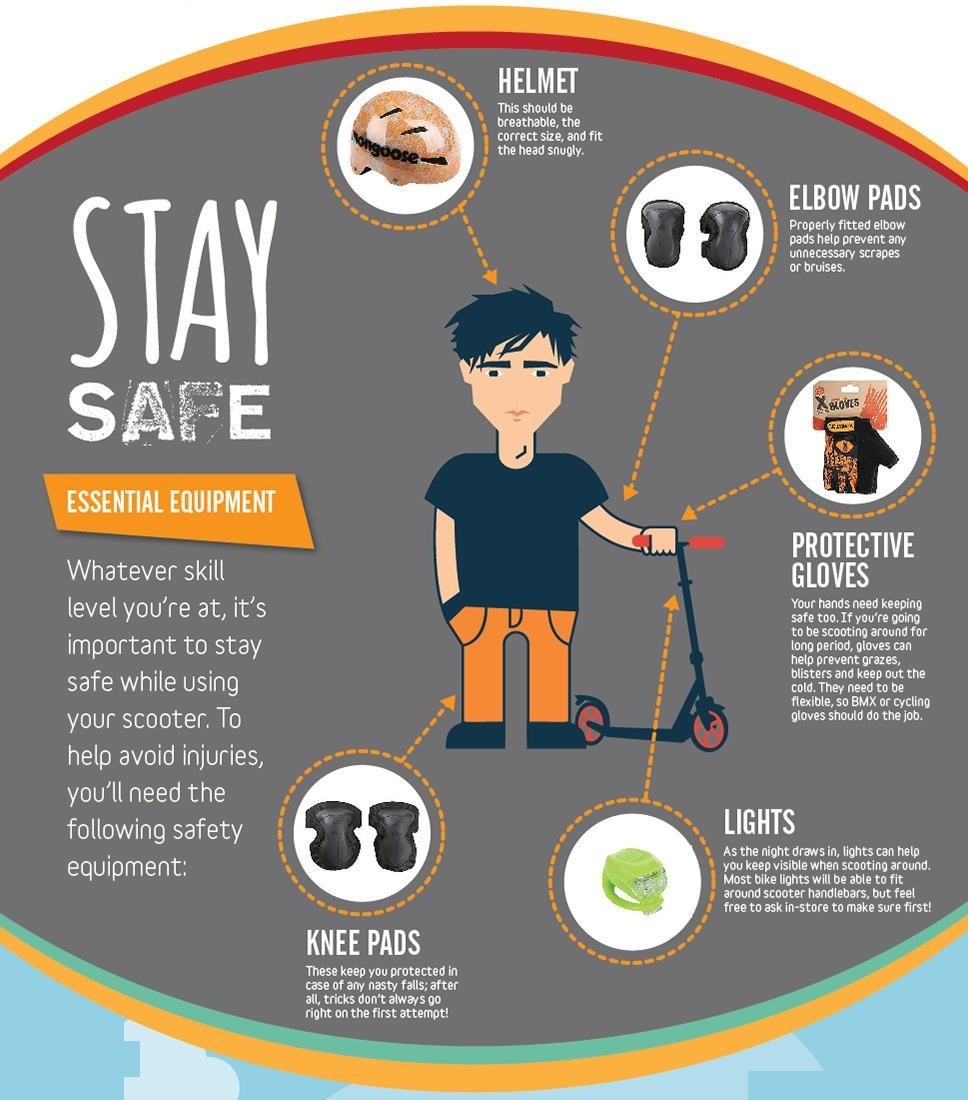
How parents should use these scooter safety infographics
The images on this page are quick visual reminders, not a substitute for the product manual, current local rules, or an adult checking the rider and scooter. Older infographics can also use broad advice that needs context. Read each image with your child, then turn every point into something the child can demonstrate before the ride begins.
Start with three questions: Can the child make the scooter stop on command? Can they keep a straight line while looking ahead? Can they follow a boundary even when excited? If any answer is no, move to a slower scooter, a flatter practice area, or direct hands-on instruction.
A five-minute pre-ride routine
- Fit the helmet. It should sit level and low on the forehead. Adjust the side straps around the ears and tighten the chin strap so the helmet does not slide when the child shakes their head.
- Check the scooter. Hold the front wheel between your shoes and gently test the handlebar for movement. Spin the wheels, test the brake, inspect the deck, and look for loose fasteners, cracks, sharp edges, or damage.
- Check the rider. Tie laces, secure loose clothing, empty dangling straps, and use closed-toe shoes. Knee and elbow pads are useful during learning and whenever falls are likely.
- Check the route. Remove gravel, water, toys, cords, and other surprises. Keep beginners away from traffic, driveways, stairs, pools, steep slopes, crowds, and blind corners.
- Practice the stop. Ask for three controlled starts and stops before free riding. A rider who cannot stop repeatedly is not ready for more speed or a busier area.
Helmet and protective-gear fit matters
A helmet only helps when it is the correct type, undamaged, and fitted to the individual rider. Follow the helmet manufacturer’s fitting instructions and replace a helmet after a significant impact or when the manufacturer says it has reached the end of its service life. Do not buy growth room by leaving the straps loose.
Wrist guards, knee pads, and elbow pads should stay in position without cutting circulation or limiting control. Protective gear reduces some injuries; it does not make traffic, high speed, wet pavement, or an unsuitable scooter safe.
Choose the practice area before choosing speed
For a kick scooter, begin on a dry, smooth, level surface with generous run-out space. Mark a start line, a slow zone, and a stop line. Teach the child to look where they are going instead of watching the front wheel. Add gentle turns only after straight-line braking is consistent.
Motorized and electric scooters need stricter decisions. The American Academy of Pediatrics recommends that children under 16 should not operate or ride motorized or electric scooters. Also check the scooter’s exact manual, local law, landowner rules, and the rider’s demonstrated judgment. See our electric scooter age and readiness guide before treating a manufacturer age label as approval.
Stop the ride when conditions change
End the session if the brake becomes inconsistent, the handlebar shifts, a wheel develops play, the deck or frame is damaged, visibility drops, the surface becomes wet, or the rider starts ignoring boundaries. Fatigue often appears as late braking, stiff arms, poor scanning, and increasingly risky turns. A short controlled session is more useful than continuing until someone falls.
For current public guidance, parents can also review the U.S. Consumer Product Safety Commission’s Micromobility Information Center. Use the complete ForScooter safety guide for the full before-, during-, and after-ride checklist.
After a fall or near miss
Stop the session and check both the rider and scooter before continuing. Replace a helmet after an impact when its manufacturer instructs you to do so; damage is not always visible. Inspect bar alignment, folding locks, wheels, axles, deck, brake, grips, and exposed edges. If the rider shows pain, confusion, unusual behavior, or another concerning symptom, seek appropriate medical advice rather than relying on an infographic.
Ask what happened without blaming the child. A wet patch, late brake, hidden crack, poor sightline, fatigue, or unclear boundary may point to a specific change for the next ride.