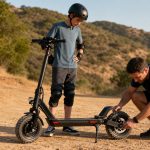
The useful question behind two wheel scooter is not whether the name is popular. It is whether the geometry, controls, wheel setup, and everyday handling match the rider and the places the scooter will actually be used. This ForScooter guide evaluates the published specifications and current manufacturer guidance; it does not claim a hands-on test.
Quick answer
This option makes the most sense for children who can glide, steer, stop on command, and keep both hands on the bar. The deciding factors are fit and control, not the largest weight limit or the longest age range on a product page. The specifications below are a screening tool; measure the rider and check the current manual before purchase or first use.
- Best fit: children who can glide, steer, stop on command, and keep both hands on the bar.
- Main evidence: Micro Sprite LED; Razor A125; Razor S; Micro Cruiser LED; wheel size, bar range, deck room, brake reach, and carry weight.
- Main caution: A two-wheel scooter rewards active balance but gives less standing stability than a three-wheel design. Large wheels roll more easily but add size and may raise the deck.
- Research basis: current manufacturer specifications and manuals, not an undocumented ride test.
The details that actually change the decision
Marketing pages tend to lead with age ranges, colors, or a single headline feature. A parent needs a different order. Start with the lowest and highest usable handlebar positions, the deck’s standing room, the braking method, the scooter’s carry weight, and the wheel layout. Then consider folding, lights, baskets, or styling. A scooter that is inconvenient can still be safe; a scooter that does not fit is a control problem.
- Micro Sprite LED
- Razor A125
- Razor S
- Micro Cruiser LED
- wheel size, bar range, deck room, brake reach, and carry weight
Read those details together. A high rider-weight limit describes structural loading, not whether a shorter child can reach the bar or a taller rider can stand without hunching. Likewise, a broad manufacturer age range cannot describe every child’s proportions, coordination, judgment, or practice environment.
Who this choice fits
A good match
children who can glide, steer, stop on command, and keep both hands on the bar should place this topic on the shortlist. The rider should be able to stand with relaxed shoulders, slightly bent elbows, and both hands centered on the grips. The front wheel or wheels should track predictably when the rider looks ahead, and the brake should be reachable without a panicked jump or an awkward twist.
The route matters just as much. Small solid wheels are most predictable on smooth, dry, clean pavement. Larger solid wheels roll over ordinary seams more easily, while pneumatic tires add pressure maintenance. Three wheels add standing stability, but the steering method can require a different lesson. Match those characteristics to a controlled place to practice.
A likely mismatch
A two-wheel scooter rewards active balance but gives less standing stability than a three-wheel design. Large wheels roll more easily but add size and may raise the deck.
Also pause if the scooter must be lifted up stairs by a child, packed daily into a small trunk, shared between riders with very different heights, or used on broken pavement. Those are not side issues. They determine whether the scooter is adjusted correctly and used consistently, or whether adults and children start accepting poor fit because changing it is inconvenient.
Fit before features
Handlebar and stance
Set an adjustable bar around the rider’s waist-to-lower-rib area as a starting point, then follow the exact manual and locking marks. The child should not need straight locked elbows or raised shoulders. On a small deck, the front foot points mostly forward and the pushing foot returns behind it; on a wider three-wheel deck, a more side-by-side resting position may be possible. What matters is that neither foot rubs a wheel or blocks the brake.
Brake and steering check
Before adding speed, ask the rider to push once, glide a few feet, and stop at a visible marker. Repeat gentle left and right turns. Direct-steer handlebars should not be yanked; lean-to-steer models respond to weight shift and often work better when the child looks through the turn. A hand brake must be reachable without releasing the grip. A rear fender brake needs a deliberate heel placement and room to cool after repeated use.
Ride quality, wheels, and everyday use
Wheel diameter affects more than speed. Small wheels keep a scooter light and close to the ground but react sharply to seams and debris. Larger wheels retain momentum and reduce the angle of attack at small pavement joints, yet they add bulk and can raise the deck. Wheel material matters too: urethane is quiet and low maintenance on smooth ground, while air tires can soften texture but need pressure and puncture checks.
Folding is valuable only when the latch is simple enough for the responsible adult to use correctly every time. Lights can make a scooter more engaging, but wheel LEDs and deck effects are not headlights. Baskets, bells, straps, and locks must stay clear of steering, hands, brakes, folding parts, and wheels. Keep the scooter’s basic control path uncluttered.
Tradeoffs to accept—or avoid
A two-wheel scooter rewards active balance but gives less standing stability than a three-wheel design. Large wheels roll more easily but add size and may raise the deck.
No scooter eliminates surface risk. Drainage grates, sand, gravel, wet leaves, mud, puddles, and sudden level changes can stop a small wheel or reduce braking. CPSC guidance recommends a properly fitted helmet, knee and elbow protection, smooth paved traffic-free surfaces, no night riding, and close supervision for young children. The manufacturer manual may be even more restrictive, and that instruction takes priority.
Alternatives worth comparing
- a three-wheel lean-to-steer model for a cautious beginner
- a fixed-bar stunt scooter for tricks
- a 200 mm cruiser for a taller confident rider
Choose stability when confidence is the gap
A lower three-wheel platform can let a beginner practice pushing, scanning, and braking without also managing active two-wheel balance. Steering style still matters: lean-to-steer teaches weight shift, while a single steerable front wheel behaves more like a bicycle handlebar.
Choose portability when adults carry it often
Compare the real product weight and folded dimensions, not the word “foldable.” A model that fits easily under a stroller or in a closet may be worth more to a city family than a larger wheel or decorative light. Never carry a scooter by a part the manual does not identify as a handle.
Choose larger wheels for distance, not stunts
Large-wheel folders suit steady cruising on appropriate paths. They are not fixed-bar stunt scooters and should not be used for jumps, grinds, or skatepark impacts. A child interested in tricks needs a correctly sized fixed-bar stunt model and a separate progression plan.
Setup and first-ride checklist
- Match the model number to the current manual and confirm every stated age, weight, and height restriction.
- Check wheel spin, axle security, brake function, bar alignment, grips, deck surface, and every latch before each ride.
- Use a properly fitted helmet and closed-toe shoes; add knee and elbow pads for a learning rider.
- Practice in daylight on a flat, clean, dry, traffic-free surface with one rider only.
- Teach a planned stop, a step-off stop, and a clear “freeze” command before adding distance or speed.
For broader sizing help, use the ForScooter kids scooter size guide. Compare wheel layouts in the two-wheel versus three-wheel guide, and keep the scooter safety guide open during setup. This article belongs to the main ForScooter cluster guide.
Buying or action checklist
Write down five things before committing: the rider’s standing height, the comfortable hand height, the intended route, who will carry the scooter, and where it will be stored. Compare those notes with the current manual. If one critical dimension is missing, ask the manufacturer instead of assuming. Check the return policy before assembly, because a fit problem is easiest to correct before outdoor use.
If this is an adjustment or ownership task, photograph the current setup before changing it. Work on a clean surface, keep small spacers and fasteners in order, and stop when the manual is unclear. Replacement parts should match the exact model and revision.
Frequently asked questions
Is the manufacturer age range enough to choose?
No. Treat it as an eligibility screen. Confirm handlebar reach, stance, brake control, maturity, route, and the specific manual. A rider near either end of a broad age range deserves an especially careful fit check.
Does a higher weight limit mean more growing room?
Not necessarily. Structural capacity and ergonomic fit are different. A rider can be far under the limit yet too tall for the bar, too large for the deck, or unable to place a foot on the brake comfortably.
Are light-up wheels enough for evening riding?
No. Decorative wheel lights do not provide a forward beam or reliable all-angle visibility. Many manuals prohibit night or limited-visibility use. Choose a daylight, traffic-free route and follow the exact manual and local rules.
How often should a scooter be inspected?
Do a short pre-ride check every time and a more careful periodic check based on use. Look for loose fasteners, wheel play, worn brakes, damaged grips, deck wear, misalignment, and a folding latch that does not fully engage.
Bottom line
This option makes the most sense for children who can glide, steer, stop on command, and keep both hands on the bar. The deciding factors are fit and control, not the largest weight limit or the longest age range on a product page. The specifications below are a screening tool; measure the rider and check the current manual before purchase or first use. Compare the real fit and route demands with the alternatives above, and reject any option that asks the rider to compensate for a bar, deck, brake, wheel, or control layout that does not suit them. Good scooter buying is mostly the discipline of saying no to the wrong geometry.