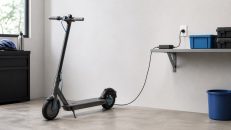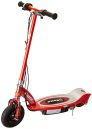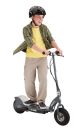
The best seated electric scooter for adults is the one that fits your body, route, storage space, and local rules—not the model with the loudest speed claim. A seat can reduce standing fatigue and make errands more comfortable, but it also adds weight, changes how the scooter handles, and may change its legal classification. For most riders, stable controls, large tires, reliable brakes, a properly engineered factory seat, and useful real-world range matter more than maximum speed.
After comparing current manufacturer specifications, manuals, safety information, service support, and the compromises that show up in daily use, our best overall pick is the GOTRAX A7. It combines a moderate 20 mph top speed, a claimed 28-mile range, 16-inch tires, dual suspension, a 264-pound payload rating, and practical cargo storage. The Hiboy U2 is the stronger value choice for a rider who wants comfort without moving into a heavier cargo platform. If carrying and storage matter most, the Hiboy S2 with its official removable seat solves a different problem.
If you are still deciding between a standing commuter, a seated design, and a larger performance scooter, begin with our broader electric scooters for adults guide. This page deliberately focuses on seated comfort, rider fit, cargo, and portability so it does not duplicate that broader comparison.
Best Seated Electric Scooters for Adults: Quick Picks
- Best overall: GOTRAX A7 — 16-inch tires, dual suspension, 264-pound payload, basket and under-seat storage, and a useful 20 mph/28-mile manufacturer specification.
- Best value for comfort: Hiboy U2 — 14-inch pneumatic tires, front and rear suspension, dual drum brakes, a basket, and a balanced 20 mph/25-mile claim.
- Best for cargo and higher payload: Razor EcoSmart Cargo — a 300-pound total payload rating, 16-inch tires, a 1,000W chain-driven motor, and a configurable rear rack.
- Best removable-seat option: Hiboy S2 with official seat — a conventional folding scooter offered by Hiboy as a seat-equipped variant, with a removable seat and a relatively manageable scooter weight.
- Best simple big-wheel option: Razor EcoSmart Metro HD — 16-inch tires, padded seat, basket, and modest 15.5 mph speed, with a heavy sealed lead-acid battery as the major compromise.
- Best premium swappable-battery option: EMOVE RoadRunner SE — 14-inch tubeless tires, adjustable suspension, a removable battery, mechanical brakes at both wheels, and a 20 mph/20-mile current specification.
Seated Adult Electric Scooter Comparison
The figures below are manufacturer claims rather than our measurements. Range changes with rider and cargo weight, average speed, temperature, stops, hills, wind, tire pressure, battery age, and riding mode. A seat does not remove those variables. It can also encourage longer rides, which makes a conservative battery reserve even more important.
| Model | Best for | Claimed speed / range | Weight / payload | Ride hardware | Main tradeoff |
|---|---|---|---|---|---|
| GOTRAX A7 | Overall utility and commuting | 20 mph / up to 28 miles | Manufacturer page does not clearly list vehicle weight / 264 lb payload | 16 × 2.5-inch tires, dual suspension, 500W average motor | Bulky; seat adjustability is not clearly documented |
| Hiboy U2 | Comfort-focused value | 20 mph / up to 25 miles | 61.5 lb / 220 lb | 14-inch pneumatic tires, front and rear suspension, dual drum brakes | Heavy for stairs; six-plus-hour charging |
| Razor EcoSmart Cargo | Cargo and higher total load | 19.9 mph / up to 16.6 miles | 75 lb / 300 lb total | 16-inch pneumatic tires, 1,000W chain drive, rear disc brake | Large, heavy, one mechanical brake |
| Hiboy S2 with seat | Removable seat and folding storage | 19 mph / up to 17 miles | 35.49 lb scooter listing / 220 lb | 8.5-inch solid tires, rear suspension, disc plus electronic braking | Shorter range and firmer small-wheel ride |
| Razor EcoSmart Metro HD | Calmer short trips | 15.5 mph / up to 12 miles | 72.89 lb / 220 lb | 16-inch pneumatic tires, 350W rear hub, rear brake | Heavy sealed lead-acid battery |
| EMOVE RoadRunner SE | Premium comfort and battery swaps | 20 mph / up to 20 miles | 50 lb / published load figures conflict | 14 × 2.5-inch tubeless tires, adjustable suspension, dual mechanical brakes | Premium price; verify current load limit and stock |
How We Chose These Models
We did not rank scooters by marketplace popularity or affiliate payout. We began with six real adult needs: an all-around seated commuter, a comfortable value model, a cargo carrier, a removable-seat scooter, a calm big-wheel errand scooter, and a premium platform with a swappable battery. A model had to solve one of those needs more clearly than the alternatives.
Then we checked the details that determine whether the scooter remains useful after the excitement of delivery day: factory or manufacturer-approved seat hardware, foot position, brakes, tire type, suspension, payload, total vehicle weight, battery type, range claim, charge time, lights, water-resistance language, certification claims, published manuals, warranty, and parts visibility. We also looked for contradictions. When a current product page gives two different payload or weight figures, we say so instead of choosing the more attractive number.
- We rewarded: a purpose-built seat, stable foot support, two-wheel braking, larger tires, useful suspension, clear manuals, modest speed, and visible service support.
- We penalized: generic seat kits, vague compatibility, difficult carrying, one-brake dependence, obsolete battery chemistry, and performance claims without useful context.
- We treated cautiously: “up to” range, maximum hill grade, peak motor watts, passenger seating, water-resistance claims, and temporary sale prices.
- We did not invent: test mileage, hill times, braking distance, comfort hours, or personal ownership experience.
This produces a shortlist, not one universal answer. A rider who has an elevator and grocery stops should not buy the same scooter as someone who climbs two flights of stairs and rides a mile to a train. Use the recommendations as route-specific starting points.
1. GOTRAX A7 — Best Overall Seated Electric Scooter
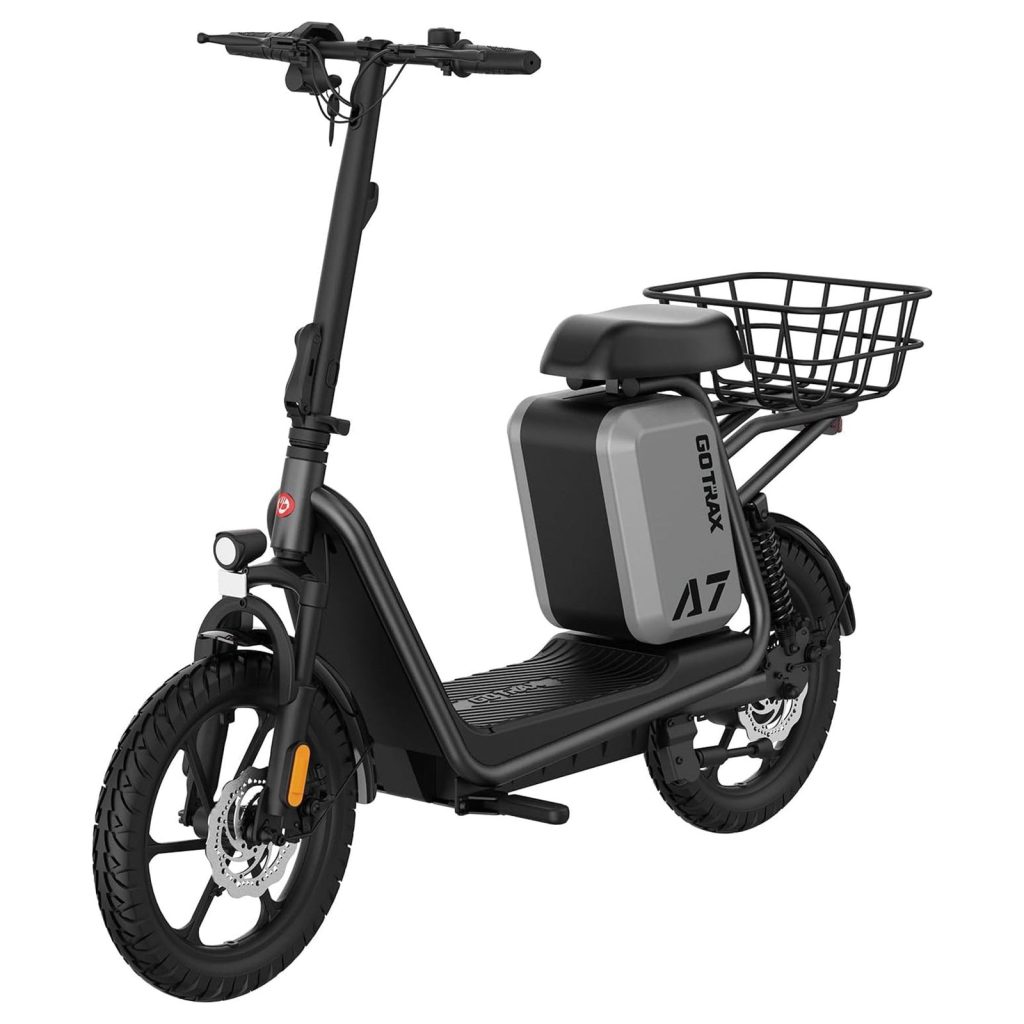
The A7 earns our top position because it behaves like a practical small seated commuter rather than a standing scooter with an afterthought bolted to the deck. Its 16-inch tires, dual suspension, cushioned seat, footrests, under-seat compartment, and rear basket all support the same job: comfortable short-to-medium trips with normal personal cargo.
The 20 mph ceiling is sensible for this category. It is quick enough to require a helmet, deliberate braking practice, and a legal route check, yet it avoids the 30- to 50-mph arms race that makes many high-performance seated machines poor recommendations for ordinary riders. GOTRAX pairs that speed with a 48V 10.4Ah battery and an “up to 28 miles” claim. Treat 28 miles as a controlled maximum, not a commute budget. For planning, we would initially assign it a round trip well below that figure and preserve at least a 25–30 percent reserve.
The 16-inch tires are a meaningful advantage. A larger wheel meets cracks and pavement lips at a gentler angle than an 8.5-inch scooter tire. Dual suspension adds another layer between the road and the seat. Neither feature makes potholes, curbs, gravel, wet leaves, or broken shoulders safe, but both are more appropriate for a seated rider who cannot unweight the deck as easily as a standing rider.
Cargo is the other reason the A7 stands out. The rear basket is useful for a light grocery bag, lock, or small work bag, while under-seat storage keeps smaller items contained. Always secure cargo so nothing reaches a wheel, brake, or chain area, and include cargo when checking the 264-pound payload. A basket does not authorize a passenger.
Our reservation is documentation around fit. The current page describes the seat as cushioned but does not clearly promise height adjustment. That matters because seat-to-pedal and seat-to-handlebar distance determines knee angle, reach, and low-speed control. Before ordering, ask GOTRAX for the current seat dimensions and confirm that your height fits the exact version.
What we like
- The frame, seat, footrests, tires, and cargo areas are designed as one system.
- Sixteen-inch tires and dual suspension better suit imperfect pavement than small solid tires.
- A 264-pound payload gives useful room for many adults plus ordinary cargo.
- Moderate speed, lights, storage, and published certification support its utility role.
- The current warranty statement is longer than the one-year coverage common in this category.
What could be better
- Vehicle weight and folded/storage dimensions are not easy to find on the current listing.
- Seat-height adjustability is not clearly stated; short and tall riders should verify fit.
- The claimed range needs a large reserve in hills, cold weather, or stop-and-go riding.
- The large bicycle-style chassis is not a practical transit carry.
Best suited for: An adult with ground-floor or elevator storage who wants a comfortable utility scooter for errands and moderate commutes.
Skip it if: You must lift the scooter daily, need a compact folding package, or cannot confirm that the fixed geometry fits you.
Source: official GOTRAX A7 product page. Confirm the current manual and exact delivered specification.
2. Hiboy U2 — Best Value for Comfort
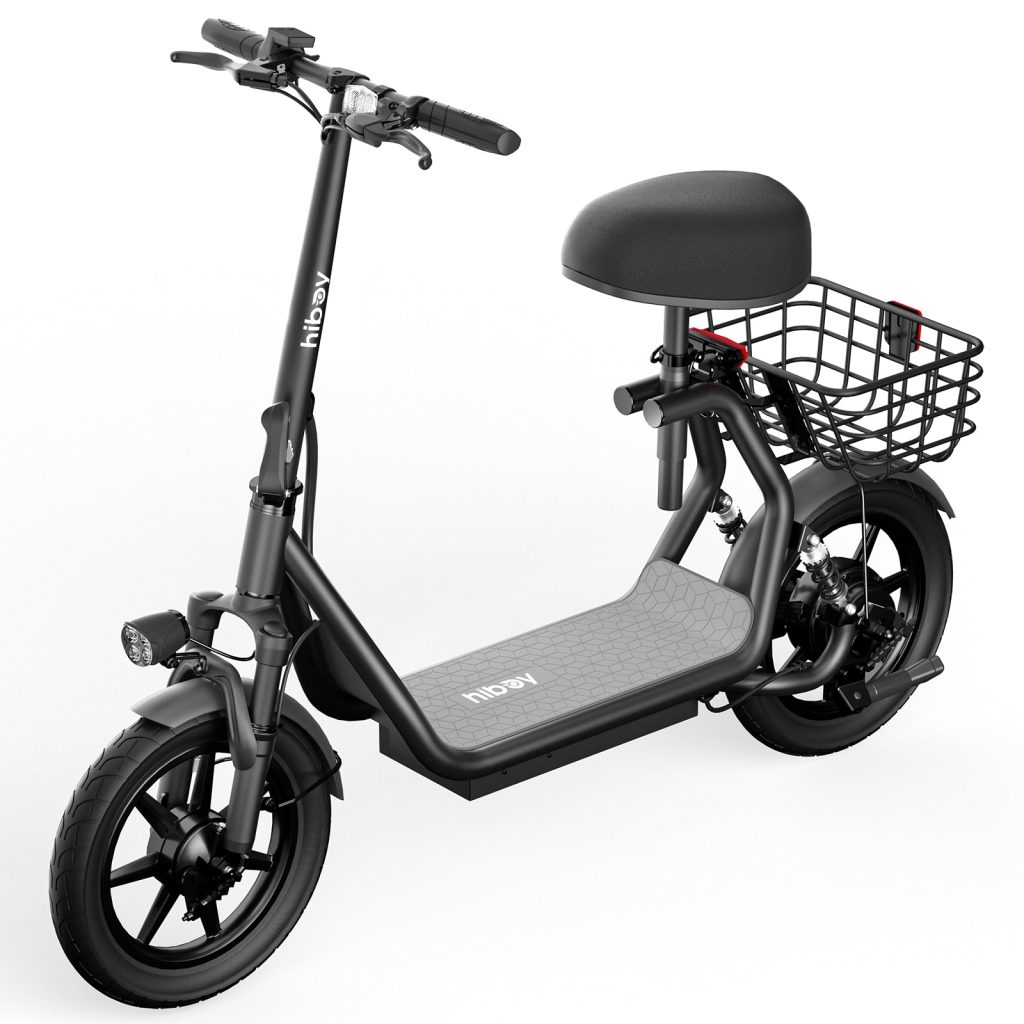
The U2 is our value choice because it keeps the features a seated rider will notice—pneumatic tires, suspension at both ends, two mechanical brakes, a basket, and a padded seat—without moving into the size and price of a premium RoadRunner-style platform. The 20 mph top speed and 25-mile manufacturer range claim are appropriate for routine errands and shorter commutes.
Comfort begins with the contact points. Fourteen-inch air-filled tires can deform around small imperfections instead of transferring every impact directly into the frame. Front and rear suspension then handle some of the remaining movement. The seat still will not make a rough road smooth. A seated rider carries more weight through the saddle and has less ability to lift their body over an impact, so route quality matters more, not less.
The braking layout is reassuring for an adult utility scooter. Hiboy lists drum brakes front and rear. Drums are protected from road dirt and usually need less frequent attention than exposed discs, though they can feel less sharp and still require adjustment. The rider should learn to squeeze both controls progressively on a clean, empty surface rather than discovering the brake balance in traffic.
The U2’s main compromise is weight. At 61.5 pounds it may sound manageable next to a 75-pound cargo model, but it is still awkward for stairs, a high trunk lip, or a narrow apartment hallway. The 6.5-hour charging estimate also means an empty battery is not a quick lunch-break refill. Plan charging around normal use and let the battery cool before connecting the charger.
Hiboy lists three speed modes around 11, 16, and 20 mph. That is useful for a new owner: the lowest mode provides a calmer place to learn throttle response, steering, and braking. Do not interpret a lower mode as permission to skip safety gear or ride somewhere the vehicle is prohibited.
What we like
- Front and rear suspension plus pneumatic tires make sense for seated comfort.
- Drum brakes at both wheels give a clear mechanical braking system.
- Three speed modes support gradual learning and route-appropriate pacing.
- The basket is useful without turning the scooter into an oversized cargo platform.
- Published battery energy, charging time, water statement, and certification claims improve comparison.
What could be better
- At 61.5 pounds, it is rollable but not genuinely portable.
- The 220-pound limit provides less load headroom than the A7 or EcoSmart Cargo.
- A full charge is relatively slow.
- Pneumatic tires improve comfort but require pressure checks and puncture planning.
Best suited for: A rider under the published load limit who values comfort hardware and two-wheel braking more than folding portability.
Skip it if: You face stairs, regularly carry heavier cargo, or cannot maintain pneumatic tires.
Source: official Hiboy U2 product page. Verify the current regional model.
3. Razor EcoSmart Cargo — Best for Cargo and Higher Payload
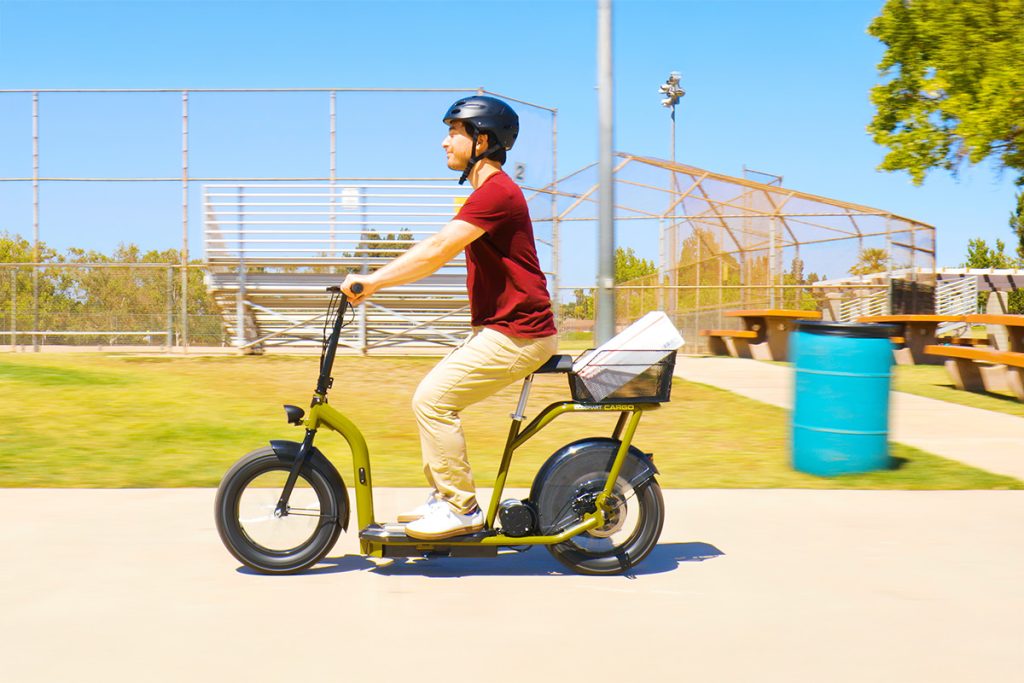
The EcoSmart Cargo is the strongest utility choice for a rider whose grocery load, work bag, or body weight makes a 220-pound scooter too restrictive. Its published total payload is 300 pounds, and the rear area can be configured for storage. The main seat has quick-release adjustment, which makes it easier to achieve a useful knee angle than a fixed-height design.
Its 1,000W chain-driven motor is unusually powerful in this moderate-speed group. The benefit is not a spectacular top speed; Razor limits the claim to 19.9 mph. The benefit should be stronger launch and load handling within the intended envelope. Peak hill ability still depends on rider plus cargo, battery state, grade, surface, and temperature. A powerful motor cannot make an unsafe slope, loose shoulder, or overloaded rack appropriate.
The 16-inch pneumatic tires give the chassis a more bicycle-like stance. They should roll over ordinary surface seams more gracefully than small scooter tires, but Razor does not list conventional suspension. Tire pressure and route choice therefore carry more of the comfort job. Keep the tires at the manual’s specification; an underinflated tire can feel soft while increasing heat, rolling resistance, rim damage, and puncture risk.
There is one significant braking limitation: the current specification lists a rear disc brake. A properly maintained rear brake can stop the scooter, but a single mechanical brake does not provide the redundancy or front-wheel braking contribution of the A7, U2, or RoadRunner SE. We would reserve extra stopping distance, inspect the system frequently, and keep speed conservative—especially with cargo.
The convertible rear rack deserves careful language. Razor includes a removable rear seat/storage setup, but carrying a passenger depends on the exact manual, the total 300-pound load, local classification, helmet rules, and whether passenger use is legal. Never put a child in a basket or improvise footrests. For most owners, the safest default use is cargo secured low and centered.
What we like
- The 300-pound total payload is the highest clear rating in our main shortlist.
- Adjustable main-seat height helps adults achieve better leg and control position.
- Large pneumatic tires and a moderate speed suit utility riding.
- The lithium battery avoids the heavy sealed lead-acid chemistry of the Metro HD.
- Lights and flexible rear storage support errand use.
What could be better
- Seventy-five pounds and a long frame make it difficult to lift or store.
- The 16.6-mile range claim is modest for the vehicle’s size.
- A rear-only mechanical brake deserves conservative speed and careful maintenance.
- Chain drive adds noise and maintenance compared with a direct hub motor.
Best suited for: A ground-level rider who needs a clearly published higher payload and a useful cargo rack for local errands.
Skip it if: You need stairs, compact storage, long range, or dual mechanical brakes.
Source: official Razor EcoSmart Cargo page and current owner manual. Confirm passenger and road rules locally.
4. Hiboy S2 with Official Seat — Best Removable-Seat Option
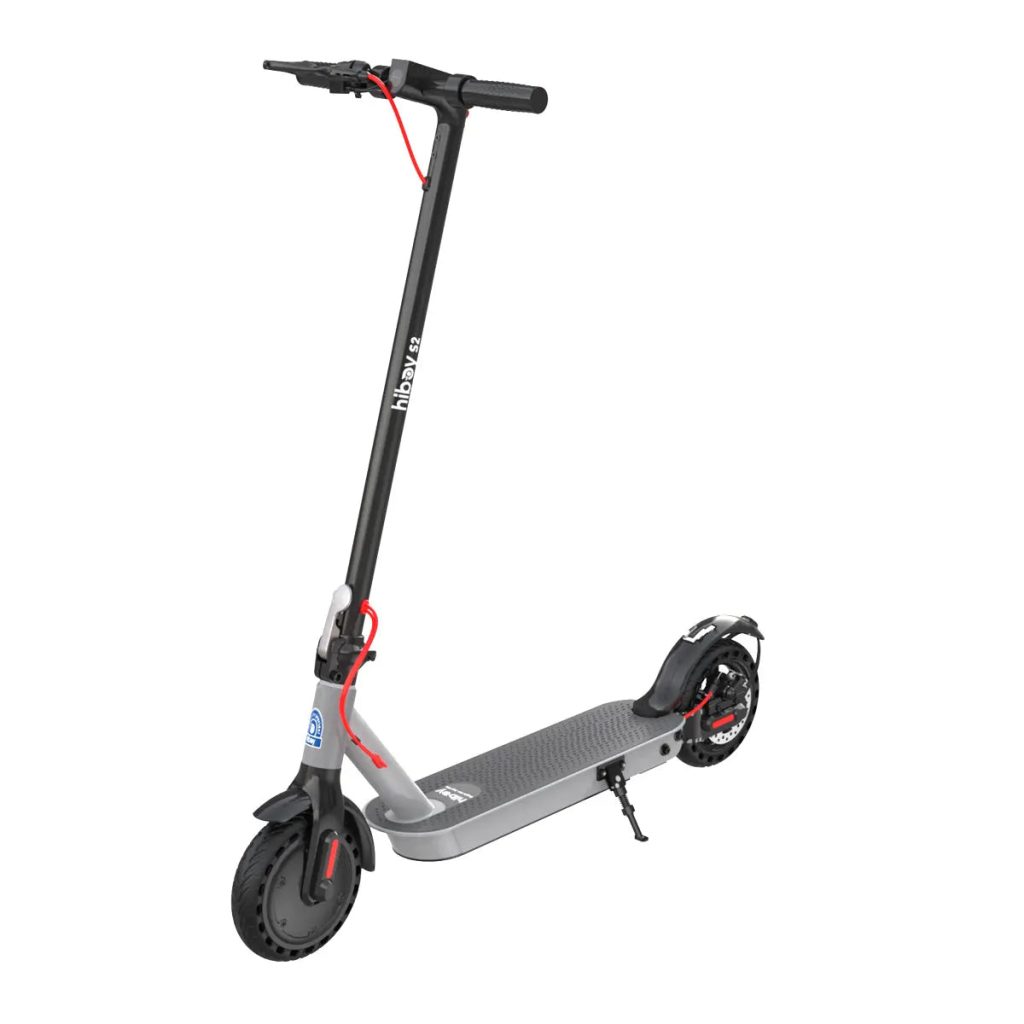
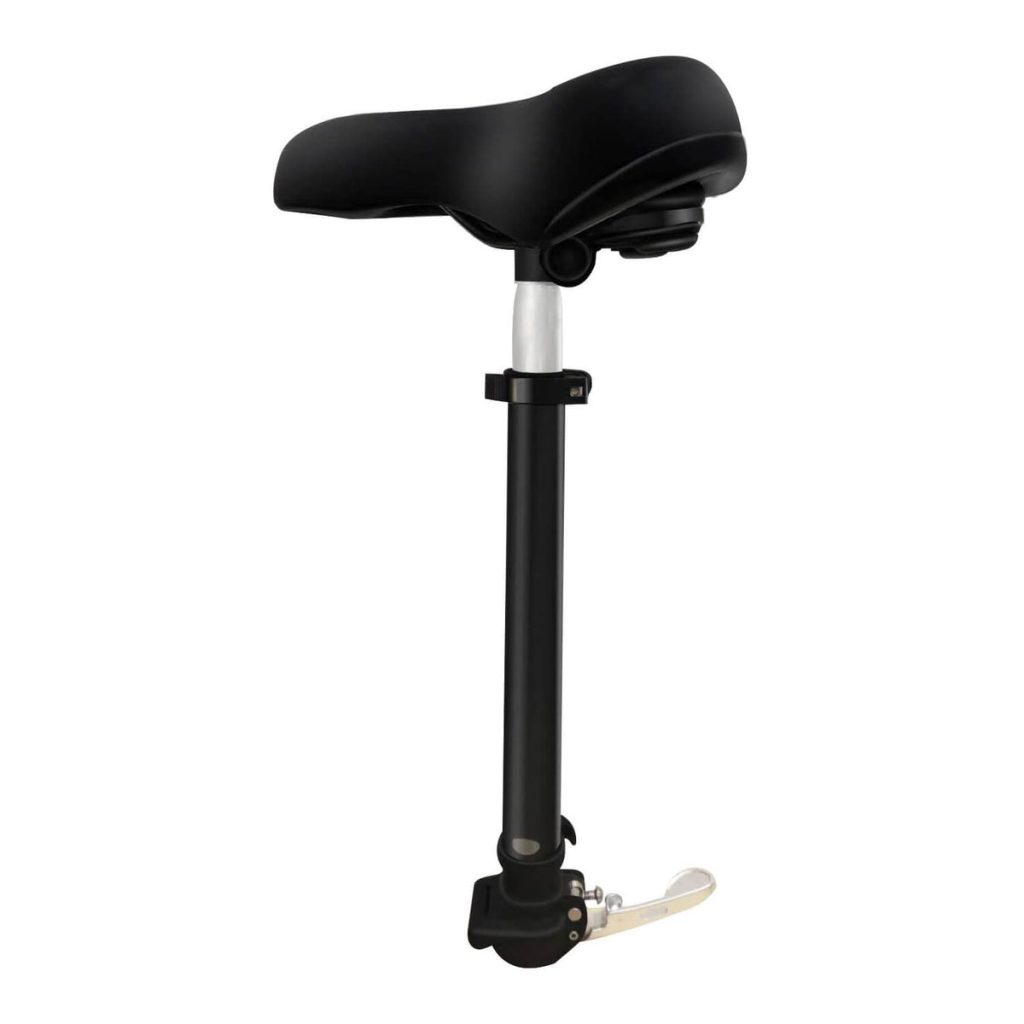
The S2 belongs here because it addresses the biggest weakness of most seated scooters: storage. Hiboy sells a seat-equipped S2 variant rather than leaving the buyer to guess whether a universal post will fit. The seat can be removed, the stem folds, and the base scooter is listed around 35.49 pounds. That does not make the complete seated package featherweight, but it is far easier to plan around than a 61- to 75-pound fixed utility chassis.
The tradeoff is ride quality. Its 8.5-inch honeycomb tires cannot puncture, but they transmit more vibration and have less ability to deform around sharp edges than pneumatic 14- or 16-inch tires. Rear suspension helps at one end; the front remains rigid. A padded seat cannot erase that feedback. This model makes the most sense on short, smooth, predictable pavement where compact storage matters more than plushness.
The 17-mile range claim is also smaller than those of the A7 and U2. For a seated rider at normal commuting speed, a short hilly route may consume a much larger share than the headline suggests. Start with a two- or three-mile shakedown, record battery change, and expand gradually. If your normal round trip approaches double digits, a larger battery model offers a safer reserve.
We like the combination of a rear disc brake and electronic braking more than an electronic-only layout, but it is not the same as two independent mechanical brakes. Practice smooth stops and understand which lever or control activates each system. Because the wheels are small, sudden steering while braking can upset the scooter quickly.
Most importantly, buy the exact manufacturer seat version or the exact Hiboy part approved for your S2 revision. Similar-looking decks and mounting holes are not proof of compatibility. A loose seat plate or incorrect fastener can fail without warning.
What we like
- The official seat option avoids generic compatibility guessing.
- Removable seat and folding stem make storage more realistic.
- Solid tires eliminate routine punctures.
- The scooter is substantially lighter than the fixed seated utility models.
- Short charging time is convenient for a modest battery.
What could be better
- Small solid tires produce a firmer, less forgiving seated ride.
- Only the rear has conventional suspension.
- Range reserve is limited for longer commutes.
- The published 35.49-pound figure may not include every seat component; confirm total carry weight.
Best suited for: A smaller-space rider with smooth short routes who wants the seat to come off and the scooter to fold.
Skip it if: Your pavement is rough, your route is long, or you want large pneumatic tires and suspension at both ends.
Source: official Hiboy S2 with seat page. Match the seat to the exact S2 revision.
5. Razor EcoSmart Metro HD — Best Simple Big-Wheel Option
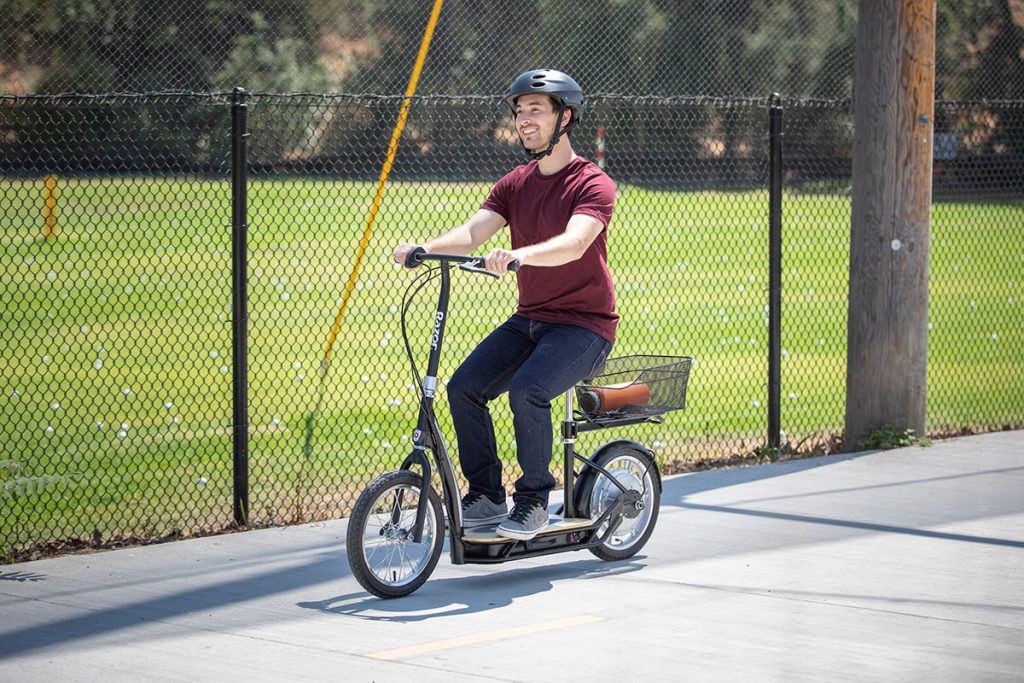
The EcoSmart Metro HD is an older, simpler kind of seated scooter. Its appeal is easy to understand: a padded seat, 16-inch air-filled tires, a basket, a hub motor, and a modest 15.5 mph maximum claim. For a calm neighborhood errand on good pavement, that can be enough. There is less temptation to pay for high speed or app features that the rider will not use.
Its biggest weakness is the battery. Razor uses a 36V pack made from three sealed lead-acid batteries. This chemistry is inexpensive but heavy and less energy-dense than modern lithium-ion packs. It contributes to the scooter’s 72.89-pound weight while supporting only a 12-mile maximum claim. Lead-acid batteries also dislike being stored discharged and typically lose useful capacity sooner when neglected.
That does not make the Metro HD unusable. It makes the ownership case specific. A rider with a garage, a very short route, access to the correct replacement pack, and no need to lift the scooter may prefer its familiar layout and current Razor parts ecosystem. An apartment commuter who expects to carry it or ride ten miles every day should choose a lithium model.
The 16-inch pneumatic tires provide more bump absorption than small solid tires, but there is no conventional suspension listed. Keep pressure correct and slow down before broken pavement. The rear hand brake is simple; it also leaves the same lack of dual mechanical braking we noted on the EcoSmart Cargo. Test lever travel before every ride and never let a worn brake become a later problem.
What we like
- Moderate speed suits calmer local trips.
- Sixteen-inch pneumatic tires are more appropriate for a seated rider than tiny solid wheels.
- Seat, basket, rack, and hub motor make a straightforward utility package.
- Razor still publishes a manual and lists the model in its adult range.
What could be better
- The sealed lead-acid battery is heavy and offers modest range.
- At 72.89 pounds, portability is poor.
- A rear-only mechanical brake lacks redundancy.
- The 12-mile headline leaves little reserve for an ambitious commute.
Best suited for: A budget-conscious rider with garage storage and a short, flat, predictable local route.
Skip it if: You need stairs, modern battery energy density, a long commute, or two mechanical brakes.
Source: official Razor EcoSmart Metro HD page and owner manual.
6. EMOVE RoadRunner SE — Best Premium Swappable-Battery Option
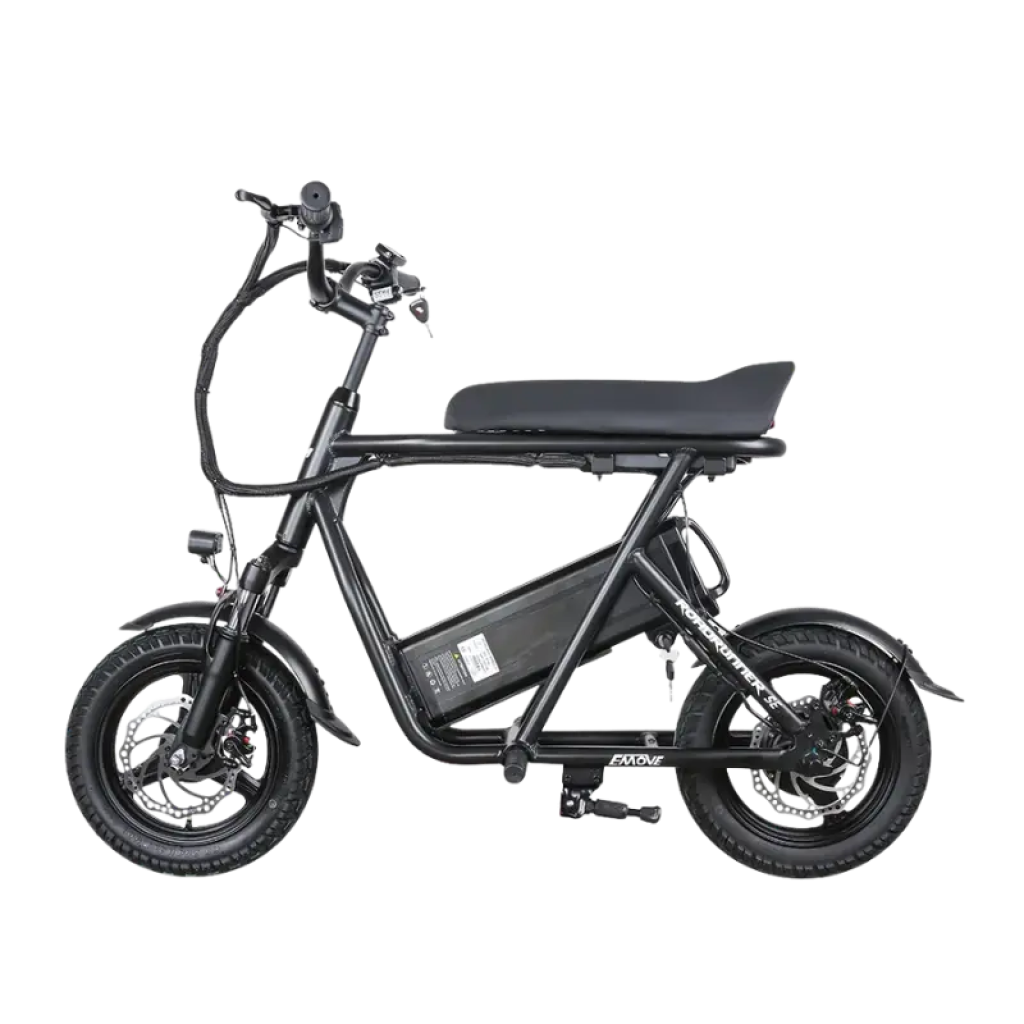
The RoadRunner SE is the premium alternative for someone who wants a compact minibike-style seated scooter, battery removal, and more adjustable ride hardware. The battery unlocks from the frame, which allows charging away from the whole vehicle and reduces the weight carried at one time. Voro’s current page says the scooter is 50 pounds and 39 pounds with the battery removed.
Its 14 × 2.5-inch tubeless tires are wider than ordinary standing-scooter tires, and the suspension can be adjusted for rider load and surface. Adjustment is not magic: an overly soft setting can bottom out, while an overly firm setting can transmit impacts. Start with the manufacturer’s baseline, make small equal changes where appropriate, and do not adjust a moving vehicle despite marketing wording that may imply otherwise.
Front and rear mechanical brakes with 180mm rotors are a strong feature in this category. The RoadRunner SE also includes turn signals, headlight, brake light, key ignition, and a key-locked battery. Those features improve convenience but do not prevent theft. The open frame still needs a serious lock around a structural member, and the battery should come indoors if the storage location is very hot, cold, or insecure.
The biggest issue is inconsistent documentation. The technical specification area lists a 330-pound maximum, while the FAQ says the model supports 240 pounds. Weight also appears as 50 or 55 pounds in different parts of the page. We will not resolve that contradiction by choosing the larger claim. Riders near 240 pounds should ask Voro Motors for the current manual, serial-specific limit, and warranty position in writing before purchase.
Inventory is another variable. The page can display both purchase controls and out-of-stock language. Treat this as a model to check, not a guaranteed available recommendation. Do not substitute a faster RoadRunner solely because it is available; higher speed, legal classification, braking needs, and insurance exposure can change sharply.
What we like
- Removable battery improves charging flexibility and staged carrying.
- Front and rear mechanical disc brakes provide two-wheel braking.
- Wide tubeless tires and adjustable suspension support comfort.
- Lights, turn signals, key ignition, and a battery lock improve daily usability.
- The 20 mph specification is more practical than the brand’s high-speed RoadRunner variants.
What could be better
- The current product page conflicts with itself on load and weight.
- Price is high for a 20-mile maximum range claim.
- Availability can be inconsistent.
- The open minibike format may be classified differently from a stand-up scooter locally.
Best suited for: A rider who values a removable battery, two-wheel braking, and tunable comfort and will verify the exact current limits before paying.
Skip it if: You need an unambiguous high payload, guaranteed stock, or a low-cost utility scooter.
Source: official EMOVE RoadRunner SE page. Written specification confirmation is especially important for this model.
Factory Seat, Approved Accessory, or Universal Seat?
This is the most important distinction in the category. A factory-seated scooter is designed around the seat, rider position, foot support, frame loads, and controls. A manufacturer-approved accessory seat may be safe when installed on the exact compatible model and revision. A “universal” seat is an unknown unless the scooter manufacturer explicitly approves it.
A seat post acts like a lever. Every bump creates load at the bracket and deck, and a seated rider cannot instantly transfer all body weight through their legs. Incorrect bolts, short threads, a thin mounting plate, or a fatigued deck can fail even when the scooter feels stable during a driveway test. Never drill, weld, or clamp near a battery enclosure without the manufacturer’s written procedure.
Compatibility can also change within one product name. A brand may revise a deck, battery box, or folding mechanism while keeping the same marketing name. Match model number, generation, serial range, and manual—not just the photograph.
Is a Seated Electric Scooter the Same as a Mobility Scooter?
No. The seated recreational or commuter scooters in this guide are generally two-wheel vehicles that require balance, steering coordination, mounting ability, quick braking decisions, and the ability to place a foot down. A mobility scooter commonly uses three or four wheels, has a different stability envelope, and may be regulated or accommodated differently.
A seat does not make a two-wheel scooter medically suitable. If balance, vision, reaction time, pain, medication, or lower-body strength affects emergency control, ask an appropriate clinician and consider a purpose-built mobility device. There is no shame in choosing the machine designed for the actual need.
Likewise, a seated scooter may be treated as a motorized bicycle, moped, motor-driven cycle, or unclassified motor vehicle rather than an electric kick scooter. That can change license, registration, equipment, roadway, bike-lane, sidewalk, age, and insurance requirements. Our street-legal electric scooter guide explains what to verify, but the final answer must come from your state/province, city, land manager, and insurer.
How to Choose the Right Seated Scooter
1. Start with the route, not the product
Map the exact round trip. Record distance, steepest hill, speed limits, pavement condition, crossings, bike-lane gaps, train or bus connections, stairs, elevator dimensions, parking, and indoor charging access. Ride or walk the route at the time you plan to use it. A quiet Sunday path can be a completely different place during a weekday rush.
Then classify the assignment. A two-mile grocery trip with a garage favors the A7 or EcoSmart Cargo. A short apartment-to-train connection favors the S2 with seat. A rider who needs battery charging upstairs while the scooter stays in secure ground-level storage may prefer the RoadRunner SE. The route should be able to eliminate a recommendation.
2. Check legal classification before speed
Write down the legal definition that applies to the exact vehicle. Does it require pedals? Is a seat permitted? What is the motor-power limit? Is classification based on design speed or current speed mode? Are mirrors, lights, a bell, turn signals, registration, or insurance required? Where can it be ridden? Can a landlord, campus, transit agency, or employer impose additional restrictions?
Do not assume that selecting an 11 mph mode legally turns a 20 mph seated scooter into a lower class. Some rules use the vehicle’s designed or capable speed. Do not rely on a seller’s generic “street legal” badge. Save the official rule and ask the authority if wording is unclear.
3. Fit the rider while stationary
Seat height should allow a comfortable knee bend at the footrests or deck, without forcing the knees high into the handlebar area. The rider should reach both grips and brake controls with relaxed shoulders and slightly bent elbows. Turning the handlebar fully should not trap a knee or pull a cable tight.
The rider also needs a reliable stop position. On a two-wheel seated scooter, one or both feet may need to reach the ground quickly. A high seat that looks efficient can be intimidating at intersections. A very low seat can crowd the knees, reduce steering space, and make bumps feel harsher.
- Can you mount and dismount without pulling the throttle or using a loose accessory as a handle?
- Can you hold both brakes, look over each shoulder, and turn the bars without losing balance?
- Are both feet fully supported during travel, with heels and toes clear of wheels and road?
- Can at least one foot reach the ground confidently at a stop?
- Can you read the display without looking down for more than a glance?
4. Count rider, clothing, lock, and cargo
Payload is not just body weight. Add shoes, winter clothing, backpack, lock, groceries, tools, and any mounted accessory. Stay below the manufacturer’s limit with useful margin. Performance, braking distance, tire load, suspension travel, and frame stress all change before a scooter reaches a published maximum.
For cargo, keep weight low, centered, and secured. A high backpack can raise the combined center of mass; a one-sided bag can pull the scooter in turns; loose straps can enter a wheel. A rear basket changes front-wheel loading and can make steering feel lighter. Make the first cargo ride slow and short.
5. Treat scooter weight as an everyday task
“Portable” is not a specification. Measure every step between storage and pavement. A 50-pound scooter may be manageable when its battery removes and each piece has a safe handhold. A 35-pound folding scooter can still be awkward if the seat post prevents a secure carry. A 75-pound cargo chassis may require a ramp and two people.
Before buying, lift a similar object to trunk height without twisting. Measure the trunk opening, elevator, doorway, hallway turn, and storage footprint. Never depend on dragging a powered scooter up stairs; the tire can accelerate or damage steps, and the rider can fall backward.
6. Choose tires and suspension for the surface
Large pneumatic tires generally provide the best comfort and obstacle behavior in this group. Their cost is maintenance: pressure checks, valve access, punctures, tubes or sealant, and replacement labor. Tubeless tires reduce pinch flats and may seal small punctures but still require pressure and can be difficult to seat at home.
Solid honeycomb tires remove puncture maintenance but transmit more vibration and provide less forgiveness over sharp edges. On a seated scooter, that firmness travels through the saddle. Rear-only suspension helps, but it does not turn an 8.5-inch solid tire into a 16-inch pneumatic wheel.
Suspension should have enough travel for rider plus cargo without frequent bottoming. Look for loose pivots, leaking dampers, bent hardware, and changes in ride height. Do not add aftermarket shocks simply because the eye-to-eye length appears similar; spring rate, mounting load, clearance, and geometry also matter.
7. Prefer clear, redundant braking
Two mechanical brakes give an adult rider the clearest redundancy. A mechanical plus electronic or regenerative system can work well, but the rider needs to understand how it behaves when the battery is full, the electronics are off, or the surface is slippery. A single rear brake can be adequate at modest speed when maintained, yet it deserves more following distance and frequent checks.
Brake labels are not braking-distance tests. Tire grip, rider load, surface, lever adjustment, pad condition, and technique determine the stop. Learn progressive pressure in an empty area at walking speed, then repeat at modest speeds. Do not perform a first full-force stop in traffic.
8. Compare battery energy, not range alone
Battery energy in watt-hours is voltage multiplied by amp-hours. The A7’s 48V 10.4Ah pack is about 499Wh; the U2’s published 36V 10.4Ah specification is about 374Wh; the S2’s 36V 7.5Ah pack is about 270Wh. These calculations identify battery class, but controller tuning, motor efficiency, speed, tires, and test conditions still prevent a simple range conversion.
Lead-acid capacity is even harder to compare with lithium because usable energy and voltage sag change under load. The Metro HD’s heavy pack is one reason its practical assignment should remain short. If you need help building a reserve, use our electric scooter range guide.
9. Verify electrical certification and the exact charger
Look for a certification claim tied to the complete scooter system, such as UL 2272, and verify it in the manufacturer’s current documentation or certification database where possible. Battery certification and system certification are related but not interchangeable. A logo in a marketplace image is not enough.
Use only the manufacturer-specified charger for the exact battery. Connector fit does not prove voltage, current, polarity, or communication compatibility. Do not use an adapter to make an unknown charger fit. Replacement packs should be original or explicitly approved for that model and revision.
10. Investigate parts before you need them
Search for tires, tubes, brake pads or shoes, cables, charger, battery, display, throttle, key, seat clamp, mounting plate, basket hardware, lights, and control module. Download the manual before purchase and locate serial/model labels. Ask whether the brand supports owner repairs, dealer service, or mail-in work.
A low sale price loses value if a worn tire or broken seat bracket makes the whole scooter unusable. Parts availability is one reason we favored established current product pages over anonymous marketplace models with changing brand names.
Which Type Fits Your Daily Use?
How Much Range Do You Really Need?
Begin with the round trip, not the one-way distance. Add routine detours, then add a reserve. For a six-mile round trip, we would not target a scooter that barely completes six miles in ideal marketing conditions. A conservative initial requirement might be 10–12 miles of expected performance, with more margin for hills, cold weather, heavier load, frequent stops, or battery aging.
A simple first-week method is safer than guessing. Charge with the correct equipment, confirm tire pressure, ride a short repeatable loop in your normal clothing and cargo, and record distance and displayed battery change. Repeat on several days. Battery bars are coarse indicators, so do not extrapolate aggressively from the first bar. Expand distance gradually while preserving a return reserve.
Speed has a large effect because aerodynamic drag rises rapidly. A seated posture can present a different frontal area than a standing tuck, and stop-and-go acceleration consumes energy. Hills add load; cold batteries deliver less; soft tires waste energy. A claimed 25-mile scooter may be a sensible 10-mile commuter and a poor 24-mile commuter.
First-Week Setup and Shakedown
Do not treat assembly as removing plastic and riding away. Read the current manual from beginning to end. Photograph the model and serial labels. Confirm that the charger label matches the manual. Check the packaging for loose fasteners before discarding it, and retain every seat bracket diagram.
- Install the seat, handlebar, basket, and foot supports exactly as the manual shows, using specified fasteners and torque.
- Confirm that the seat post cannot rotate, slide, or rock and that no bolt contacts the battery enclosure.
- Turn the handlebar fully both ways; cables should not pull tight, rub a tire, or change throttle position.
- Inflate pneumatic tires to the manual’s cold pressure and inspect bead seating.
- Spin each wheel off the ground and test both brakes; minor pad rub and unsafe binding are not the same.
- Check lights, brake light, signals, horn or bell, display, keys, folding latch, and battery lock.
- Secure cargo straps and remove loose clothing, laces, or bags from wheel paths.
For the first ride, choose a clean, dry, flat, traffic-free area. Use the lowest mode. Walk the scooter with power off, then practice mounting, starting, straight-line braking, turning, looking over the shoulder, and placing a foot down. Increase speed only after every control feels predictable.
After the first few miles, power off and inspect seat hardware, handlebar clamp, folding mechanism, axle areas, basket bolts, brake adjustment, and tire pressure. New assemblies can settle. Use the manual’s recheck intervals; more torque is not always safer because overtightening can strip threads or crush components.
Charging and Battery Safety
Lithium-ion batteries store substantial energy, and seated scooters often have larger packs than basic kick scooters. Charge in a dry, ventilated area away from exits and combustible clutter. Use the original or manufacturer-approved charger. Do not charge a wet, damaged, unusually hot, swollen, dropped, or modified battery.
Let the scooter cool after a demanding ride before charging. Follow the manual’s connection order and indicator instructions. Do not cover the charger or place it on a bed, couch, carpet pile, or seat cushion. Avoid extension cords unless the manufacturer expressly permits a correctly rated arrangement. Unplug according to the manual when charging is complete.
Stop using the scooter if you notice a chemical smell, hissing, smoke, unusual heat, swelling, melting, repeated charger faults, sudden range collapse, or water intrusion. Move away, keep others away, and contact emergency services if there is smoke or fire. Do not touch or carry a failing pack. The U.S. Consumer Product Safety Commission recommends using certified micromobility products, only the supplied charger, and never charging while sleeping or unattended. Our safe electric scooter charging guide gives a complete routine.
Riding Safety for a Seated Scooter
Wear a properly fitted helmet on every ride and add eye protection, gloves, closed shoes, and abrasion coverage for the speed and environment. A low seat can create the illusion of safety, but a 20 mph fall still carries significant energy. Clothing should not hang near the rear wheel, chain, brake, or footrests.
Seated steering is different from standing steering. You have less ability to shift weight vertically, and abrupt handlebar input can upset a small wheel. Look through turns, keep both hands on the grips, keep feet on the intended supports, and slow before the corner. Do not extend a foot while moving; it can catch the ground and twist the knee.
Assume drivers may not recognize the vehicle’s speed or width. Lights improve visibility but do not prove you were seen. Avoid blind spots, signal early, leave escape space, and do not weave between vehicles. Wet paint, metal plates, leaves, gravel, and sand can offer very little grip. An IP rating or “light rain” statement does not promise wet-road traction or waterproofing after wear.
Never carry a passenger unless the exact manual permits it, every required seat and foot support is installed, the total load is within limit, and local law allows it. Never place a child in a cargo basket. Never tow, hold an animal leash, use a phone, or wear headphones that block traffic sound. See our broader scooter safety guide for a pre-ride checklist.
Maintenance Schedule That Protects the Seat and Chassis
| Interval | Checks | Why it matters |
|---|---|---|
| Before every ride | Tires, brakes, seat movement, latch, lights, battery lock, loose cargo, unusual noise | Catches immediate control or mounting problems |
| Weekly or every few rides | Tire pressure, seat/post bolts, basket/rack hardware, cable routing, brake travel, visible frame areas | Seated and cargo loads can loosen hardware or reveal fatigue |
| Monthly | Tread, puncture sealant if specified, brake wear, chain tension/lubrication on chain models, suspension play, charger cable | Prevents gradual wear from becoming a roadside failure |
| After rain, impact, or transport | Drying, water entry, bent parts, wheel alignment, battery casing, brake rotor/drum, connector condition | Exceptional events need immediate inspection |
| Before storage | Clean and dry, follow battery state guidance, correct temperature, periodic battery check, tire support | Protects battery life and prevents flat spots or corrosion |
Use the model manual’s intervals when they are more specific. Do not spray high-pressure water at bearings, controls, battery seams, or connectors. Wipe with a damp cloth and dry the scooter. Do not lubricate brakes or tire tread. For chain-driven models, use only the recommended lubricant and keep it off the braking surfaces.
Seat hardware deserves its own inspection. Look for rotation, sinking, cracking around the mount, missing thread-locking devices, elongated holes, bent clamps, and damaged welds. A squeak can be harmless material movement or an early warning; locate it before riding. Replace fasteners with the exact grade and dimensions specified, not a convenient hardware-store substitute.
Common Buying Mistakes
Buying by top speed
A higher maximum can increase legal exposure, stopping distance, protective-gear needs, battery drain, and crash severity. For normal errands, a well-controlled 15–20 mph machine is often more useful than a 35 mph platform.
Assuming a seat guarantees comfort
Comfort depends on tire size, tire pressure, suspension, saddle shape, seat height, reach, road condition, and ride duration. A seat on 8.5-inch solid tires may feel harsher than standing on a suspended pneumatic-tire scooter.
Ignoring total weight until delivery
Seated scooters are awkward shapes. Add the seat, battery, basket, lock, and any cargo when planning stairs or a trunk lift. “Folding” may only lower the handlebar; it does not make a 75-pound frame easy to carry.
Installing a generic seat kit
Universal marketing is not engineering approval. Incorrect drilling can enter the battery compartment, weaken the deck, void a warranty, or place the rider where knees interfere with steering. Use a factory design or an exact manufacturer-approved accessory.
Planning around the advertised range
“Up to” is the upper edge of a controlled result. Reserve is not wasted capacity; it covers wind, detours, cold, hills, aging, and a forgotten charge. Prove your route gradually.
Treating the basket as a passenger seat
A basket, rack, or cushion does not authorize a passenger. Passenger weight changes steering and braking and needs proper foot support, handholds, equipment, manual approval, and legal permission.
Charging with whatever connector fits
Wrong voltage, polarity, current, or charge logic can damage the pack or cause a fire. Use only the exact specified charger. Do not “upgrade” charging speed unless the manufacturer documents the charger and battery combination.
Frequently Asked Questions
Final Verdict
For most adults who have ground-level storage, the GOTRAX A7 is the most complete seated utility package. Its 16-inch tires, dual suspension, moderate speed, useful battery class, footrests, and cargo storage solve the reasons people want a seat in the first place. Verify the current seat fit and vehicle dimensions before ordering.
Choose the Hiboy U2 when comfort hardware and two-wheel drum braking matter but you do not need the A7’s under-seat format. Choose the EcoSmart Cargo for its clear 300-pound total payload and configurable rack, accepting its 75-pound weight and rear-only mechanical brake. Choose the Hiboy S2 with official seat when compact storage outweighs range and big-wheel comfort. The Metro HD only makes sense for a short garage-based route where its heavy lead-acid battery is acceptable. The RoadRunner SE is the interesting premium choice when a removable battery and adjustable suspension matter, but its conflicting current specifications require written confirmation.
Whichever model you choose, make the route legal first, fit the seat while stationary, use the exact charger, learn the brakes in a safe area, preserve range reserve, and inspect the seat mount as carefully as the wheels. Those decisions will do more for daily satisfaction than another five miles per hour on a product page.