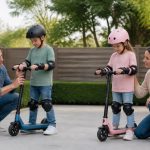
SKIDEE sells several scooters under one brand name, so a useful SKIDEE scooter review must begin with the model number. The current official comparison separates the Y100 Classic from the Y200 Kids scooter. Both use three wheels and light-up wheels, but only the Y200 lists a folding frame, removable seat, and 25–34-inch adjustable handlebar. A marketplace title that mixes those features can lead to the wrong box.
Our verdict: the Y200 is the more practical SKIDEE choice when a child genuinely needs seated and standing stages or the family needs folding storage. The lighter Y100 makes more sense when the rider already stands confidently and simplicity matters more. Neither should be bought from the broad “ages 2–12” claim alone; measure bar fit, confirm the exact manual, and check the seat’s separate limits.
SKIDEE Y100 vs Y200 at a Glance
| Feature | Y100 Classic | Y200 Kids |
|---|---|---|
| Official age range | 2–10 years | 3–12 years |
| Published capacity | 130 lb | 130 lb |
| Published weight | 7 lb | 10 lb |
| Handlebar | Adjustable; exact range not shown in comparison | 25–34 inches |
| Seat | No | Removable/foldable |
| Folding frame | No | Yes |
| Wheel layout | Two front, one rear | Two front, one rear |
| LED wheels | Yes | Yes |
Official source: SKIDEE model comparison
What the Y200 Adds
The Y200’s removable seat is its main reason to exist. A child can push from a seated position and later use the deck standing. The handlebar’s published 25–34-inch adjustment range provides a measurable starting point, and folding can reduce the storage footprint in a trunk or apartment.
Those additions also create more inspection points. The seat joint, height button, folding latch, steering assembly, rear brake, and wheels all need a firm pre-ride check. A seat is not a stroller and does not remove tipping risk. Verify the manual’s seated-mode age and weight rules rather than applying the 130-pound standing capacity to every configuration.
Why the Y100 May Be the Better Buy
The Y100 is three pounds lighter according to SKIDEE’s comparison and removes the seat and main folding mechanism from the decision. That can be valuable for a preschool rider who already stands, steers, and brakes without help. Fewer transformations mean fewer ways to assemble the scooter incorrectly.
The tradeoff is portability and growth detail. The official chart calls the handlebar adjustable but does not publish the range in the same table. Ask the seller for the exact lowest and highest deck-to-grip measurement and a current manual. If they cannot provide both, the fit is too uncertain for an online purchase.
Steering, Deck, and Wheel Behavior
Both models use the common two-front, one-rear arrangement. The front pair supports the scooter at rest, while the child shifts body weight to steer. This differs from turning a bicycle handlebar. A child who twists the bar aggressively may feel that the scooter “will not turn” until lean steering is explained.
LED wheels are powered by wheel motion, so they add visibility close to the scooter without needing a charging routine. They are not headlights and do not make night riding safe. Small polyurethane wheels still prefer clean, dry, smooth pavement; cracks, gravel, wet leaves, and driveway transitions can stop them abruptly.
Fit Before the Age Label
Check the standing bar height
Set the grips near the child’s waist to lower ribs. Shoulders should remain relaxed, elbows slightly bent, and both hands centered. A bar near the chest can reduce leverage; one near the thighs encourages a hunched posture. Use our kids scooter size guide for the full measuring method.
Check deck and kick clearance
One foot should sit securely on the deck without covering the rear brake. The pushing foot needs a clear path beside the rear wheel. Shoes that hit the wheel or seat support indicate poor fit or technique.
Treat seat and standing modes separately
For a seated child, both feet must reach the ground with useful knee bend. Record the seat’s own age, height, and weight ceiling from the manual. Remove it as soon as any limit is reached, even if standing mode remains usable.
Portability and Storage
The 7-pound Y100 is easier for an adult to carry, but it does not fold according to the official comparison. The 10-pound Y200 folds, which may be more convenient in a small car despite its higher lifting weight. Before carrying either, clean the wheels and secure any loose seat or handlebar parts.
Do not let a child operate a folding latch. After unfolding, pull gently on the bar and inspect the joint from both sides. Any clicking, partial engagement, or movement between the bar and front wheels is a stop-riding condition.
Pros and Cons
What works
- Three-wheel layout supports early standing balance.
- Motion-powered LED wheels require no charging.
- Y200 offers a seat, published 25–34-inch bar range, and folding.
- Y100 is lighter and mechanically simpler.
- Official comparison makes the two main models easier to separate.
What to consider
- Broad age ranges do not guarantee physical fit.
- Seat-mode limits are not clear in the top-level comparison.
- Seller pages may blend Y100 and Y200 features.
- Small wheels need smooth pavement.
- Parts and manual availability should be confirmed before purchase.
Affiliate link: [AFF-LINK]
Who Should Buy Each Model?
| Family need | Better starting point | Why |
|---|---|---|
| Confident standing preschooler | Y100 | Lighter, simpler, no unused seat |
| Seat-to-standing transition | Y200 | Purpose-built removable seat |
| Small trunk or closet | Y200 | Folding frame |
| Adult must carry it often | Y100 | Three pounds lighter |
| Seller cannot identify model | Neither | Feature and parts uncertainty |
First-Ride Safety Checklist
- Confirm Y100 or Y200 on the scooter and box.
- Set and lock the handlebar at the measured height.
- Check every seat and folding connection.
- Inspect wheels, axles, deck grip, and rear brake.
- Practice walking, straight glides, gentle lean turns, and stops.
- Keep away from roads, slopes, stairs, pools, and crowds.
Read our family scooter safety guide and two-wheel versus three-wheel comparison before the first session.
Frequently Asked Questions
Is a SKIDEE scooter good for a two-year-old?
The Y100 is labeled from age two, but readiness, foot reach, bar fit, and supervision still decide. The Y200 is labeled from age three on SKIDEE’s comparison.
Does every SKIDEE kids scooter include a seat?
No. The current official comparison shows a removable seat on the Y200, not the Y100. Check the model number rather than the listing photo.
Do the light-up wheels need batteries?
The wheel lights are described as LED wheels and typically illuminate through motion. Confirm the exact revision; decorative lights do not replace visibility gear or daylight supervision.
Can the 130-pound limit be used in seat mode?
Do not assume so. Get the model manual and follow the specific seated-mode limit, which may be lower than the standing maximum.
Final Verdict
The SKIDEE Y200 earns its value through the seat, measurable bar range, and folding frame. The Y100 is the cleaner choice for a child who already stands confidently and for an adult who values low carry weight. Buy only when the seller identifies the model, provides the correct manual, and confirms replacement support; otherwise choose a brand with clearer fit and mode documentation.