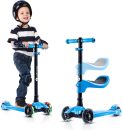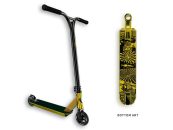
Quick fit rule: a complete stunt scooter should let the rider stand centered over the deck with relaxed shoulders, slightly bent elbows, and the bar around hip-to-waist height. A compact setup is easier to move for tricks; a larger setup can feel steadier, but an extreme in either direction reduces control.
There is no universal stunt-scooter size chart because riders have different proportions, preferences, and trick styles. Use measurements as a starting point and confirm the manufacturer’s age, height, and weight guidance.
Measure bar height correctly
Product listings may quote total scooter height, bar height from the deck, or the bar’s standalone dimensions. These numbers are not interchangeable. For a complete scooter, compare the ground-to-grip height with the rider’s hip or waist while wearing riding shoes.
A good starting fit usually allows:
- upright posture without raised shoulders;
- soft elbows rather than locked arms;
- full bar rotation without striking the torso or knees;
- stable braking and landings without excessive forward lean.
Signs the bars are too low
- the rider hunches deeply during normal rolling;
- weight stays too far over the front wheel;
- the rider struggles to absorb landings comfortably;
- the setup causes back or wrist discomfort.
Signs the bars are too high
- shoulders remain lifted or elbows cannot bend naturally;
- the bars contact the chest or limit movement;
- the front end feels difficult to lift or rotate;
- the rider cannot maintain a centered stance.
Deck length and width
A wider or longer deck offers more landing area and may feel stable, but it also adds material and changes how quickly the scooter rotates. A smaller deck can feel nimble yet leave less foot space. Beginners should prioritize a secure stance and predictable control rather than copying a professional rider’s setup.
Check usable foot space, not only the outside dimensions. Brake shape, rear dropout design, headtube angle, and concave can change how the deck feels.
Wheel size and scooter height
Wheel diameter affects ride height, speed retention, and compatibility. Common stunt-scooter wheels vary by model, and changing diameter may require matching fork, brake, deck, axle, and bearing dimensions. Never install a wheel simply because its diameter is popular.
Complete scooter or custom build?
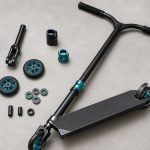
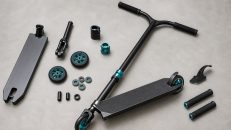
A complete scooter is usually the safer starting point because its parts were selected to work together. A custom build requires compatibility across bar diameter, compression system, clamp, fork, headset, wheel diameter, axle width, brake clearance, and deck spacing. Our stunt scooter parts guide explains those relationships.
Fit-check procedure
- Wear the same helmet, pads, and shoes used at the skatepark.
- Stand naturally on the deck with the scooter held steady.
- Check shoulder, elbow, wrist, and back position.
- Roll and brake on flat ground before attempting any trick.
- Practice basic turns, hops, and controlled landings in a designated area.
- Stop if the setup causes pain, repeated loss of control, or component movement.
Safety and growth
Do not buy a dramatically oversized stunt scooter for a child to grow into. Recheck fit after a growth spurt and inspect the bars, clamp, fork, headset, deck, brake, axles, wheels, and grips before each session. Wear a properly fitted helmet and appropriate protective gear.
See our stunt scooter buying guide and complete scooter safety guide.
Last reviewed: August 10, 2026.
Create a rider-and-scooter measurement sheet
Record the rider’s standing height, floor-to-waist height, shoe size, stance preference, and current scooter dimensions. For the scooter, record bar height from the ground and from the deck, bar width, usable deck length and width, wheel diameter, and total weight. Note whether published bar height includes grips or another reference point; brands do not always measure identically.
Use those numbers to compare complete scooters, then confirm them with the manufacturer or shop. An online age label cannot tell you whether the rider’s wrists, shoulders, knees, and feet will be comfortable in their actual stance.
Fit trade-offs for different riding goals
- Learning basic park riding: choose predictable control and a neutral stance before aggressive dimensions.
- Street-style tricks: deck width and usable foot space may matter more, but excess weight can make learning tiring.
- Transition riding: bar position and deck stability should support the rider’s posture without encouraging an overextended reach.
Do not cut bars or forks merely to imitate another rider. Cutting can permanently change compatibility and may void support. For a growing child, reassess the complete setup rather than stretching a marginal part beyond the manufacturer’s adjustment limits.
Final fit check before a full session
After assembly, verify compression, clamp alignment, axle security, wheel spin, brake clearance, grips, and bar ends. Let the rider perform slow straight lines and controlled stops on flat ground. End the test if there is headset play, bar movement, wheel rub, unusual noise, or a posture that prevents reliable braking.
When a professional fit check is worth it
Use an experienced scooter shop when measurements sit between sizes, a rider has unusual posture or mobility needs, or components have already been changed. Bring the complete scooter and the rider’s normal shoes. A useful check should include stance, steering, compression, brake clearance, wheel alignment, and several low-speed stops—not only a quick comparison of bar height.