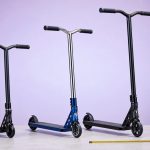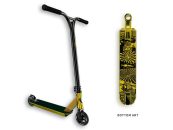
A stunt scooter is a system: the deck, bars, fork, headset, compression, clamp, wheels, bearings, brake, axles, and grips must fit and work together. This guide explains what each part does and why compatibility matters before replacement or customization.
Deck
The deck supports the rider and connects the headtube, rear wheel, brake, and axle. Length and width affect foot space and maneuverability. The headtube angle, dropout style, brake mount, wheel clearance, axle size, and rear spacing affect which parts fit.
Bars
Bars control steering and help the rider manage balance and landings. Important dimensions include height, width, outside diameter, inside diameter, and slit requirements. Standard and oversized bars do not use the same clamps, and aluminum bars can require different compression components than steel or titanium bars.
Fork
The fork holds the front wheel and passes through the headset. It must match the compression system, wheel diameter, wheel-hub width, axle, and bar setup. An incompatible fork can prevent the headset from tightening or place the wheel incorrectly.
Headset
Headset bearings allow the fork and bars to rotate inside the deck’s headtube. Integrated and non-integrated designs use different cups or deck interfaces. Roughness, clicking, binding, or play can indicate adjustment, wear, contamination, or damage.
Compression system
Compression removes vertical play while allowing the bars and fork to rotate. Common systems include IHC, HIC, SCS, and ICS variants. They use different combinations of fork, shim, bolt, clamp, bar diameter, and bar slit. Do not mix parts based only on appearance.
Clamp
The clamp secures the bars to the fork or compression assembly. Match its internal diameter to the bar and system. Tighten bolts gradually and evenly to the manufacturer’s torque specification; overtightening can damage bolts, threads, or lightweight bars.
Wheels and bearings
Wheel diameter, width, hub width, bearing size, and axle diameter must match the fork and deck. Larger wheels may not clear the brake or deck. Bearings should rotate smoothly without side play, grinding, or missing shields.
Brake and rear axle
Stunt scooters commonly use a flex or spring-style rear brake. The brake must match the deck mounting pattern and wheel diameter. The axle, spacers, and rear dropout must keep the wheel centered without binding.
Grips and bar ends
Grips provide hand contact and should not rotate or expose the bar. Bar ends cover the hollow tube and help reduce injury risk. Replace torn grips and missing or damaged bar ends before riding.
Compatibility checklist before ordering
- Complete scooter brand, model, generation, and manual
- Bar material, inside/outside diameter, and slit status
- Compression type and fork compatibility
- Clamp size and number of bolts
- Wheel diameter, width, hub width, bearings, and axle
- Deck rear spacing and brake clearance
- Manufacturer torque values and replacement instructions
If the manufacturer does not confirm a combination, ask its support team or a qualified scooter shop. Grinding, drilling, forcing, or stacking improvised spacers can weaken the assembly.
Pre-ride inspection after service
- Confirm the bars align with the front wheel.
- Check that the headset rotates smoothly with no looseness.
- Spin both wheels and test the brake.
- Verify axles, clamp bolts, and fasteners to the stated torque.
- Test at walking speed on flat ground before returning to tricks.
For fit, use our stunt scooter size guide. For ride checks and protective equipment, see the scooter safety guide.
Last reviewed: August 10, 2026.
Keep a compatibility record before ordering
Photograph the complete scooter and every relevant marking. Record the deck, fork, bars, clamp, compression system, headset, wheel diameter and width, axle diameter and length, bearing size, brake type, and any spacers. Measure with appropriate tools instead of estimating from a product photo. Then compare the proposed part with both the scooter manufacturer’s specification and the part maker’s installation guidance.
A statement such as “fits most stunt scooters” is not enough. A bar can match the clamp diameter but conflict with the compression system. A wheel can match the advertised diameter but be too wide for the fork or brake. An axle can have the right diameter but the wrong length or thread.
Change one system at a time
When possible, replace one part, assemble it correctly, and complete a static check before changing another. Multiple simultaneous changes make it harder to identify the cause of play, rubbing, misalignment, or noise. Use the specified fasteners and torque guidance; do not improvise spacers, drill components, or force an incompatible fit.
Post-service verification
- Confirm the bars and front wheel are aligned and cannot twist independently.
- Check that the headset turns smoothly without looseness or binding.
- Spin both wheels and test the brake without a rider.
- Inspect every fastener after a short, low-speed flat-ground test.
- Stop immediately if a part shifts, clicks, cracks, rubs, or loosens.
When the correct fit or procedure is uncertain, use a reputable scooter shop. Compatibility is a safety requirement, not just a way to avoid returning a part.